|
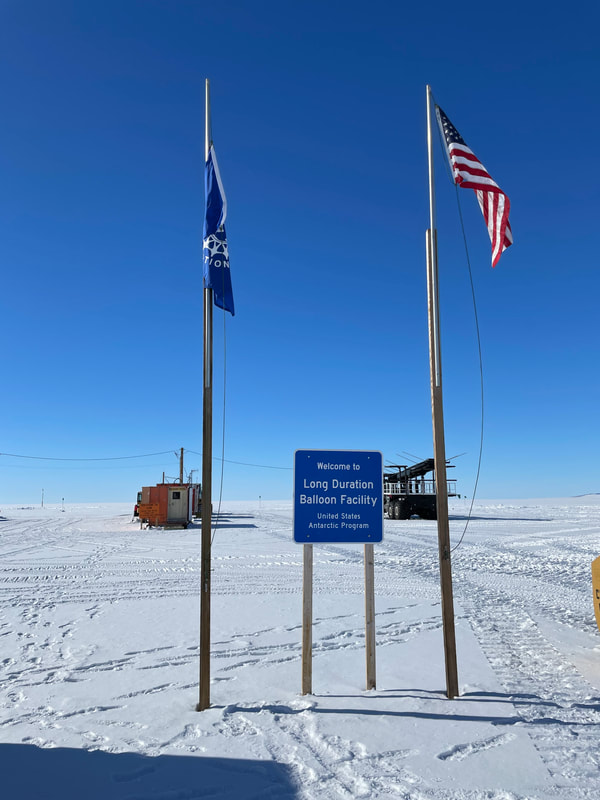
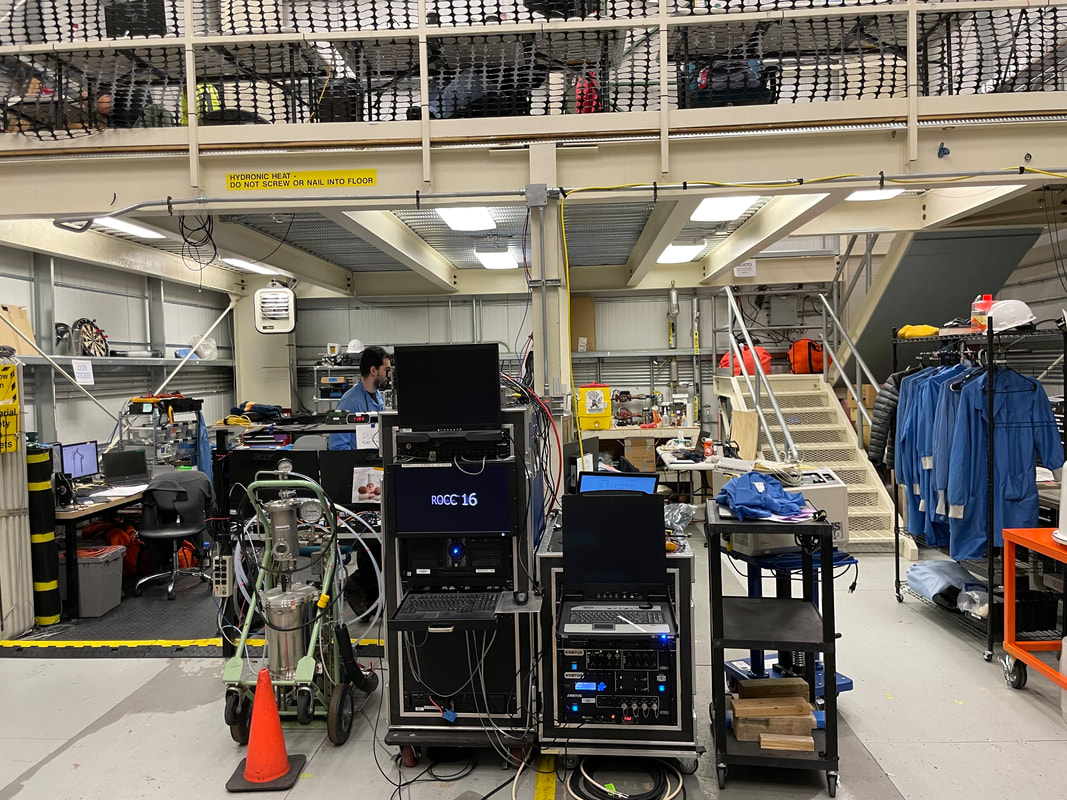
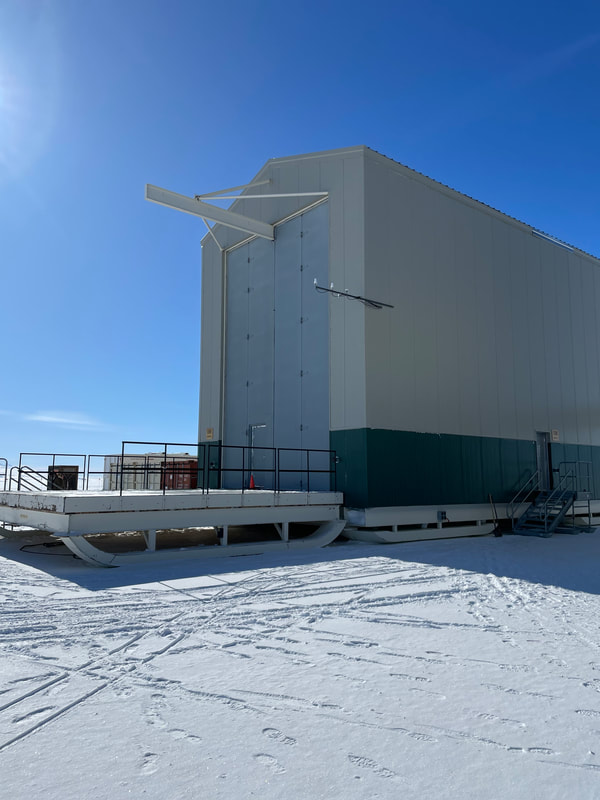
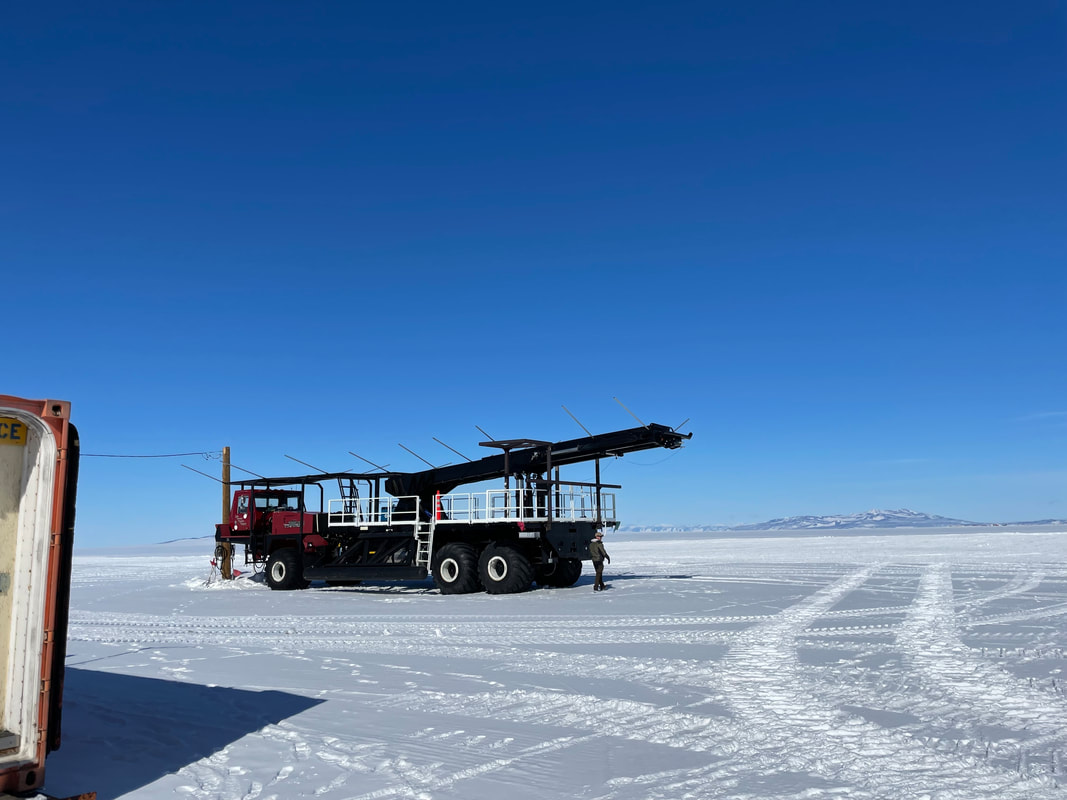
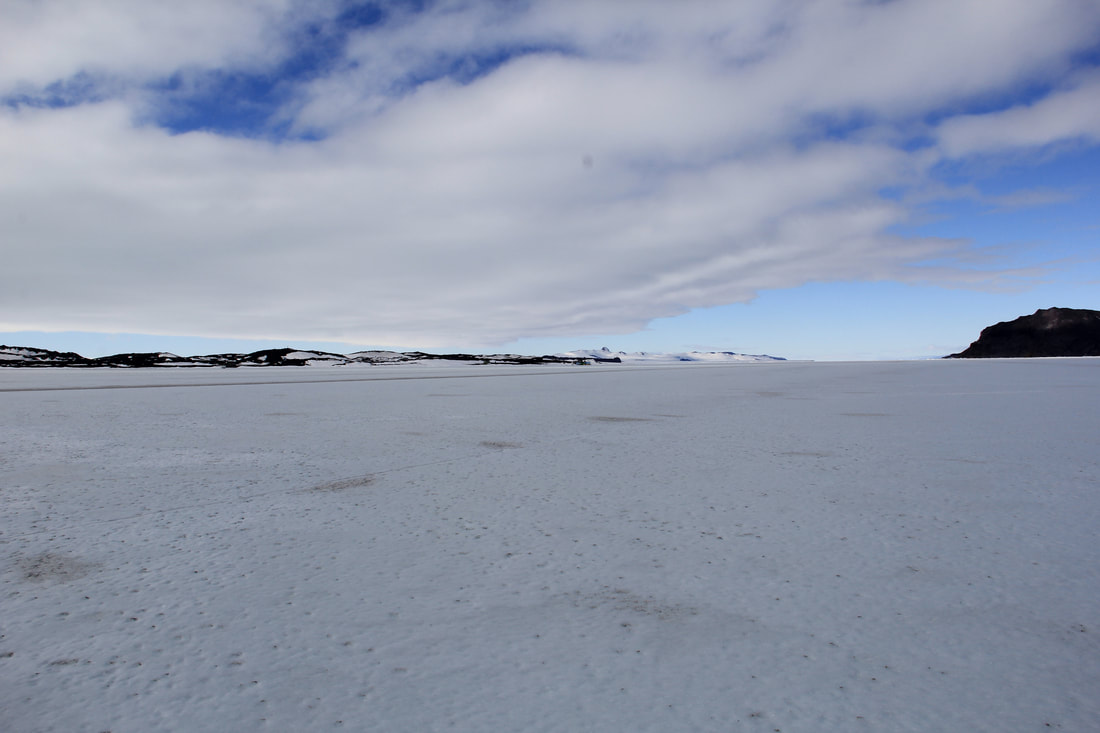
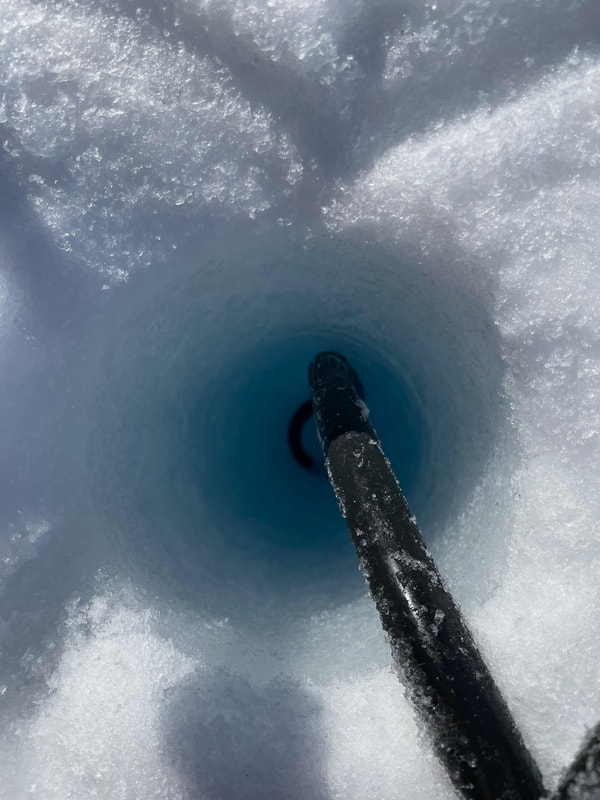
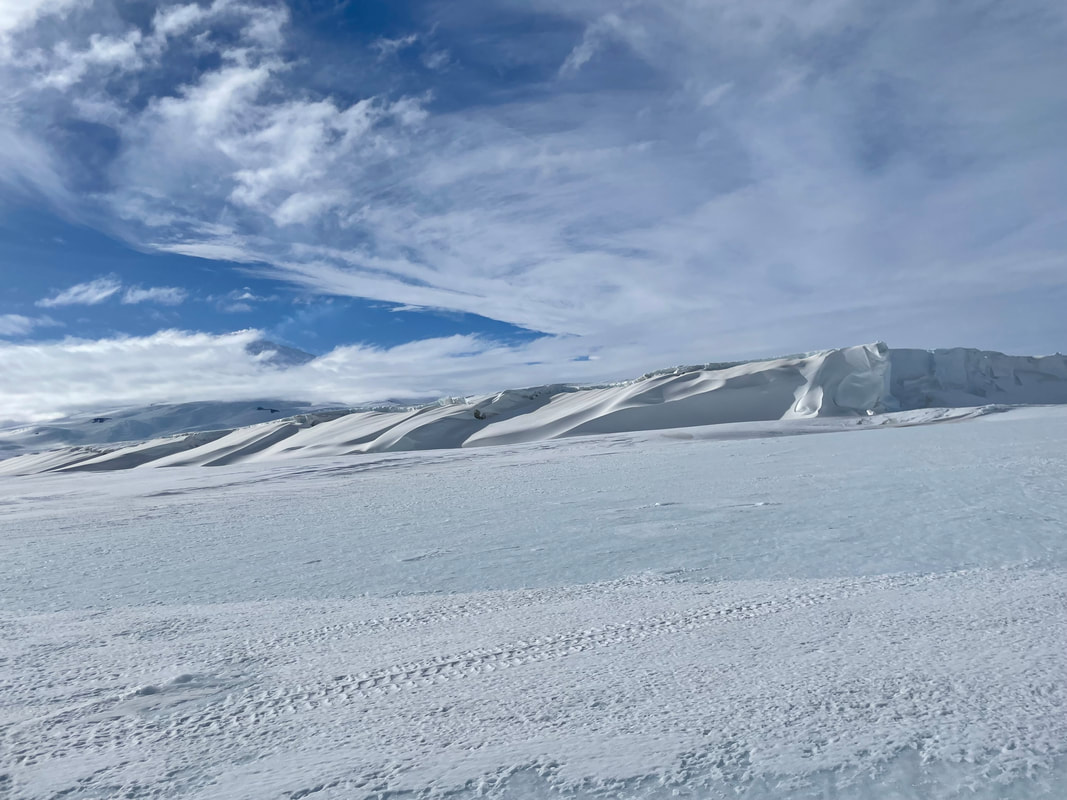
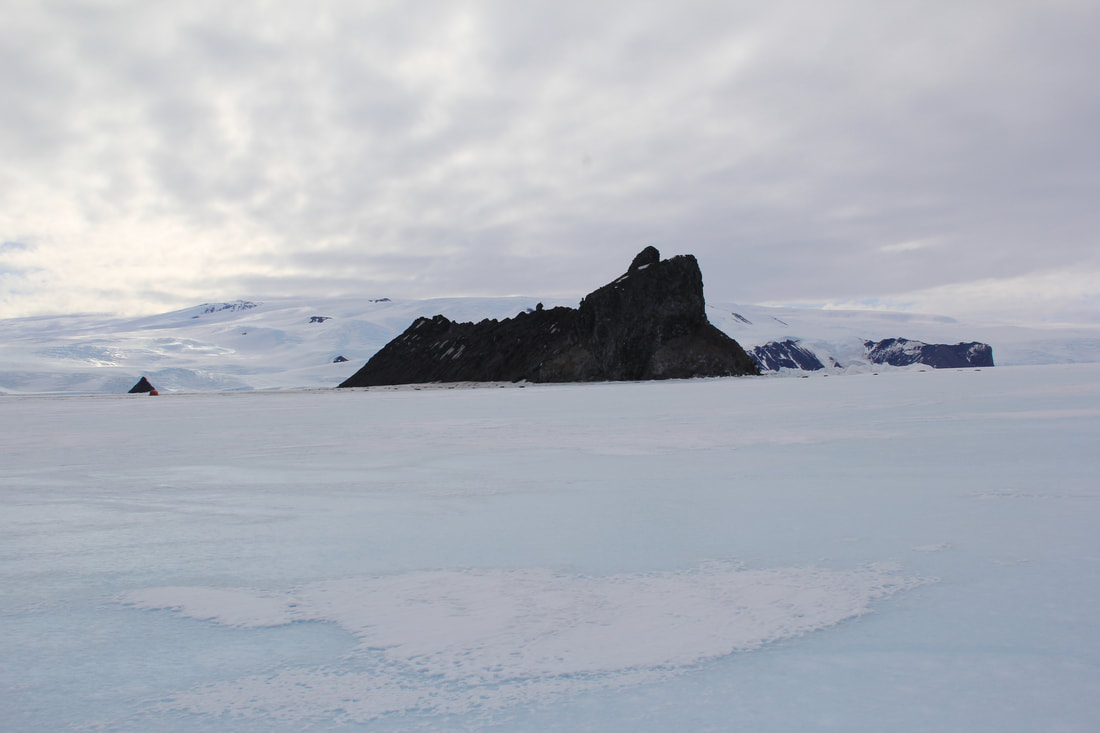
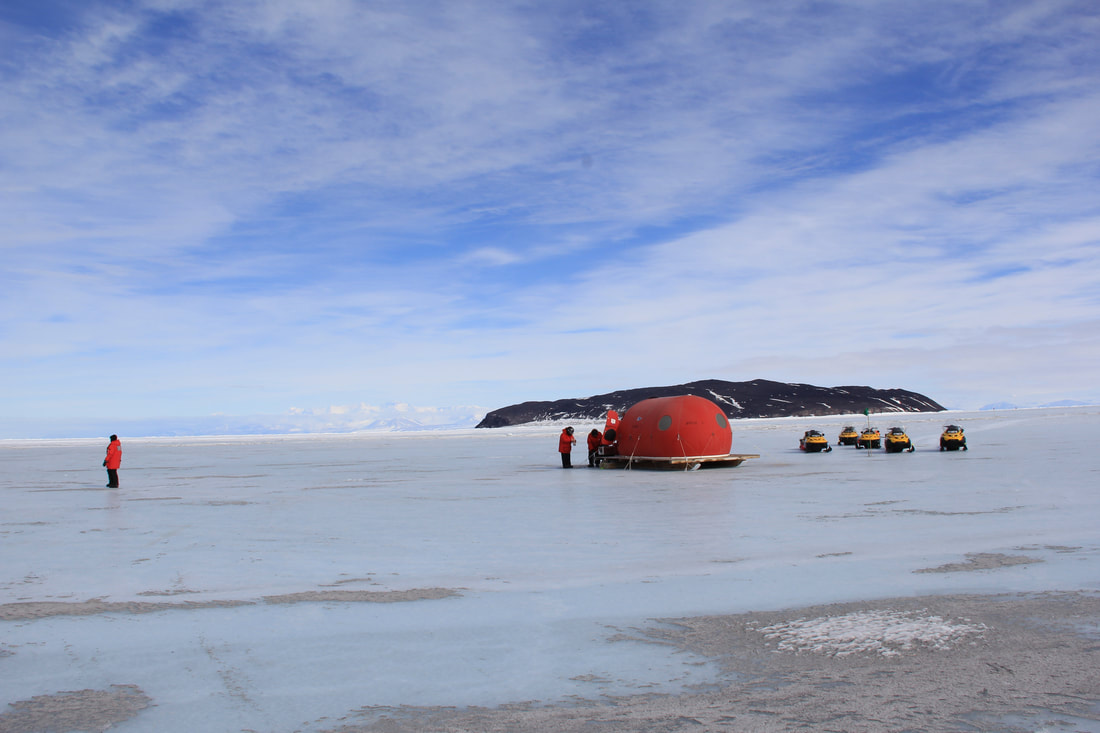
We took a break from packing up the lab today to visit LDB, the long duration balloon project site. To get there we had to catch a shuttle that drove us out of MacTown, past the New Zealand base, and out onto the ice sheet. LDB projects are under the purview of NASA and NSF. The scientists and engineers build payloads, which are gondolas with expensive scientific instruments that are lifted into the stratosphere by huge balloons. We got a tour of payload 2, which is the GUSTO project (www.nasa.gov/event/gusto/). They are launching a kind of telescope in a couple of weeks that will measure the chemical signatures of star formation and life cycle. Antarctica is an ideal location for launch because there are no cities and the winds run reliably counterclockwise around the continent, keeping the balloon aloft for days (they are aiming for at least 55). I am not allowed to share pictures of the actual payload, but I can share some other pictures of the site. (If you want to see pictures of the payload, I can share them with individuals.)
My dorm neighbor, Daniel, is an engineer from Johns Hopkins who works on the payload and he gave us a tour. He explained how temperature is a big concern because it can vary extensively depending on if the telescope is facing towards or away from the sun (or if the mission continues into the time of year when the sun actually sets). The telescope gets its energy from large solar panels that will be attached to the sides and it has about 10 batteries that store the captured solar energy (these batteries actually discharged on the voyage over and they are eagerly awaiting an emergency shipment of new ones).
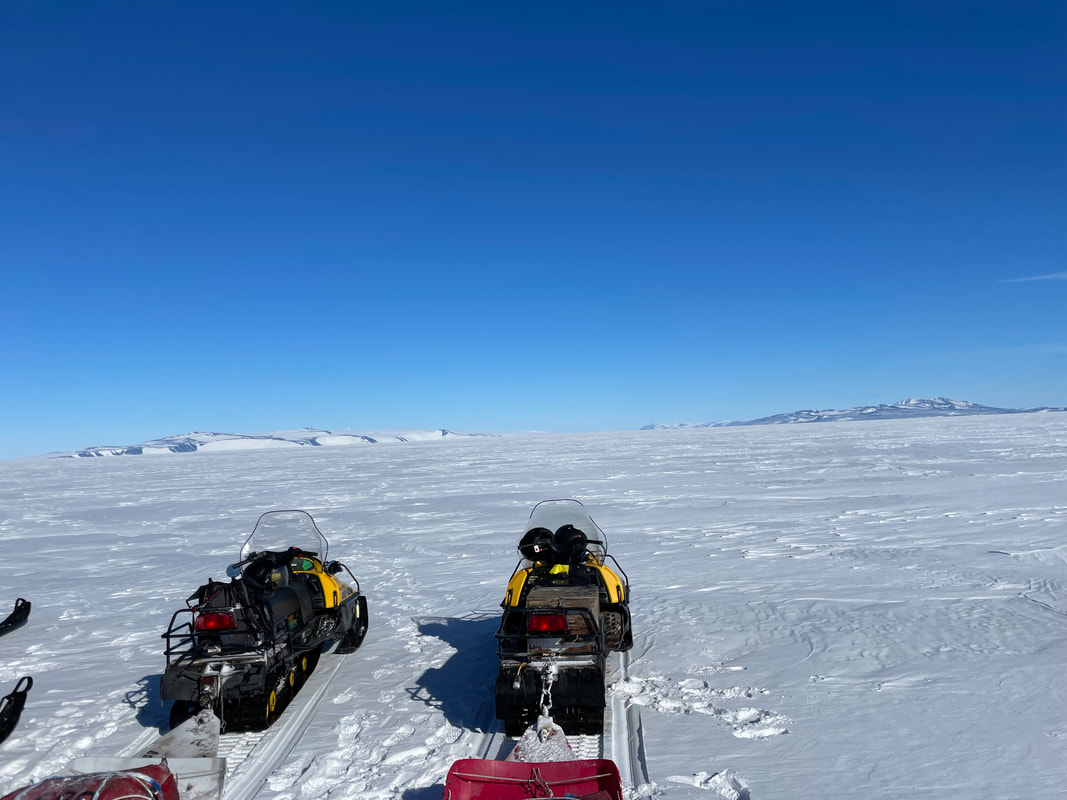
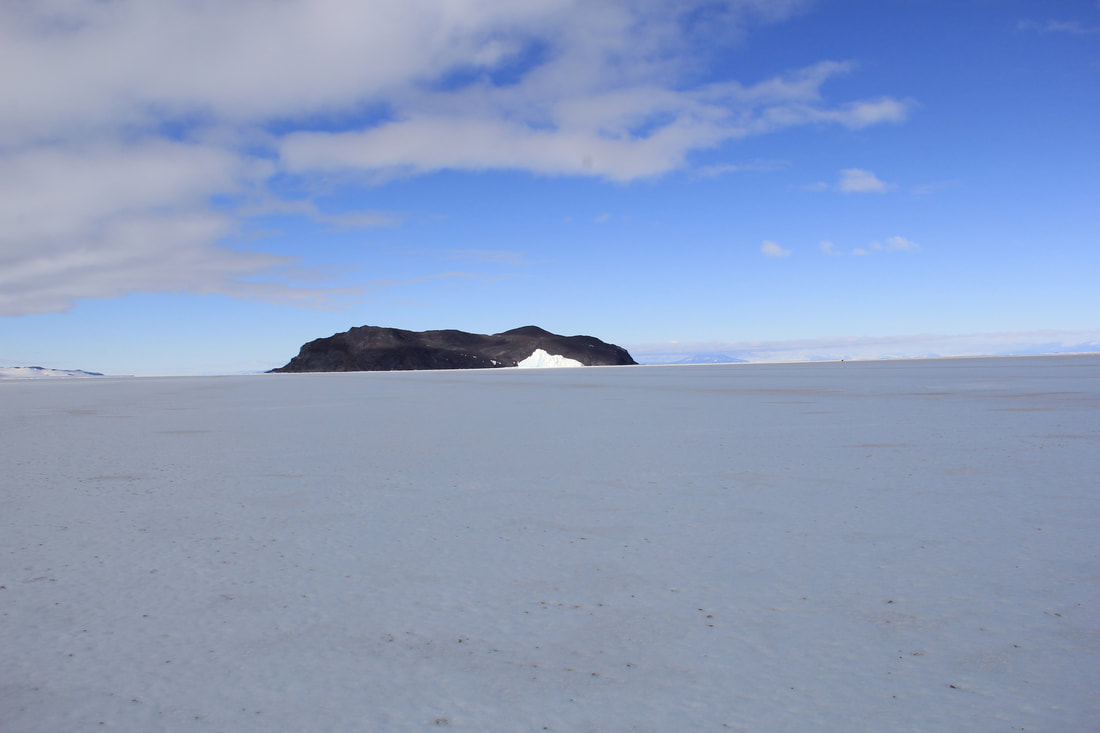
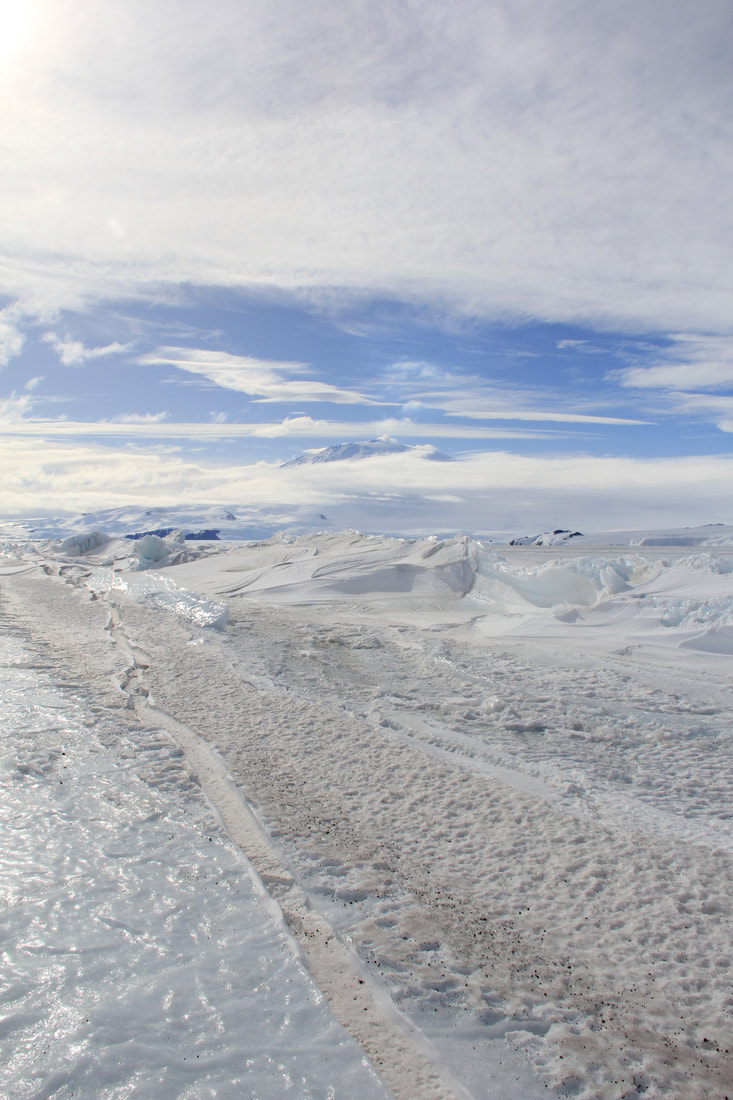
After we got back we made a quick trip to one of the field sites that we marked but didn't end up using as a sampling site to retrieve the last of our flags. It was a beautiful afternoon and we enjoyed our last ride out onto the sea ice.
1 Comment
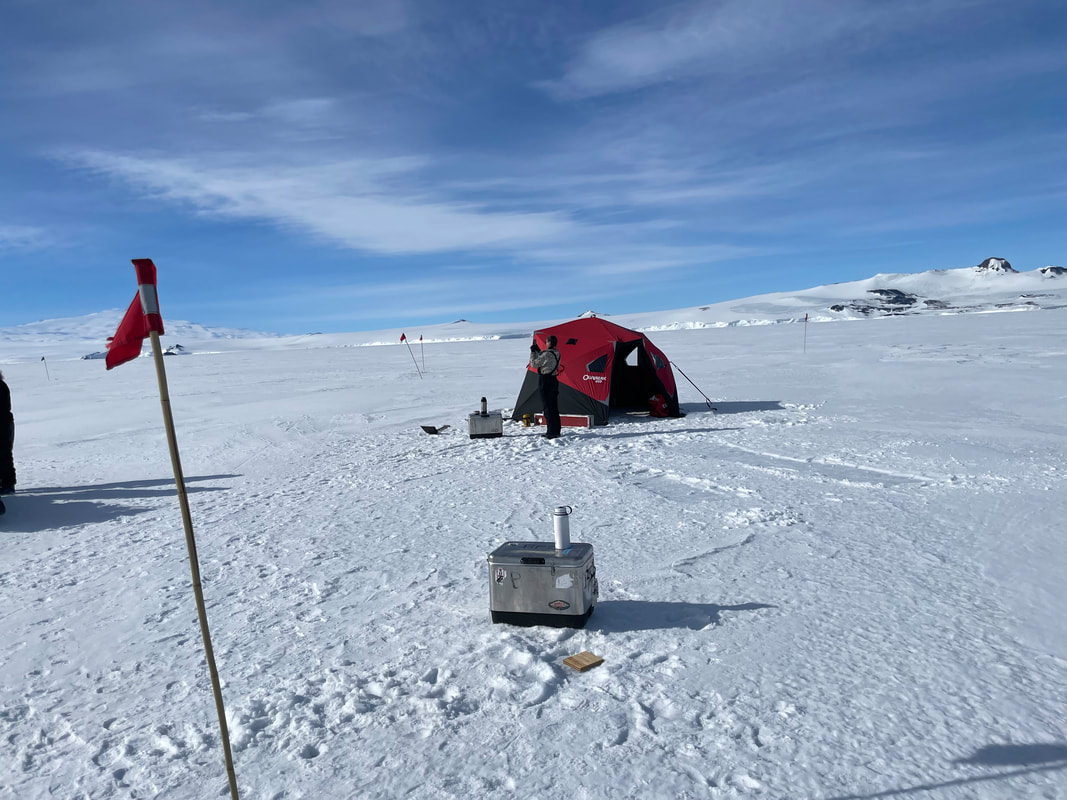
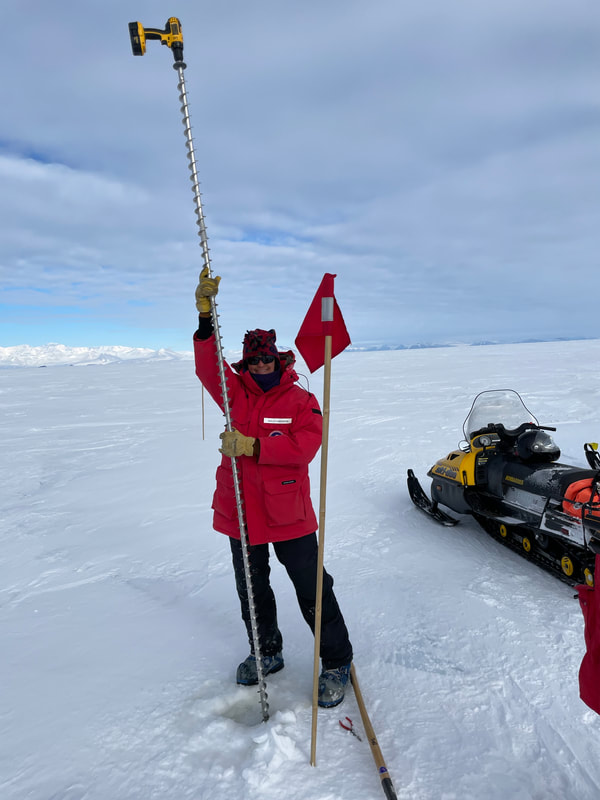
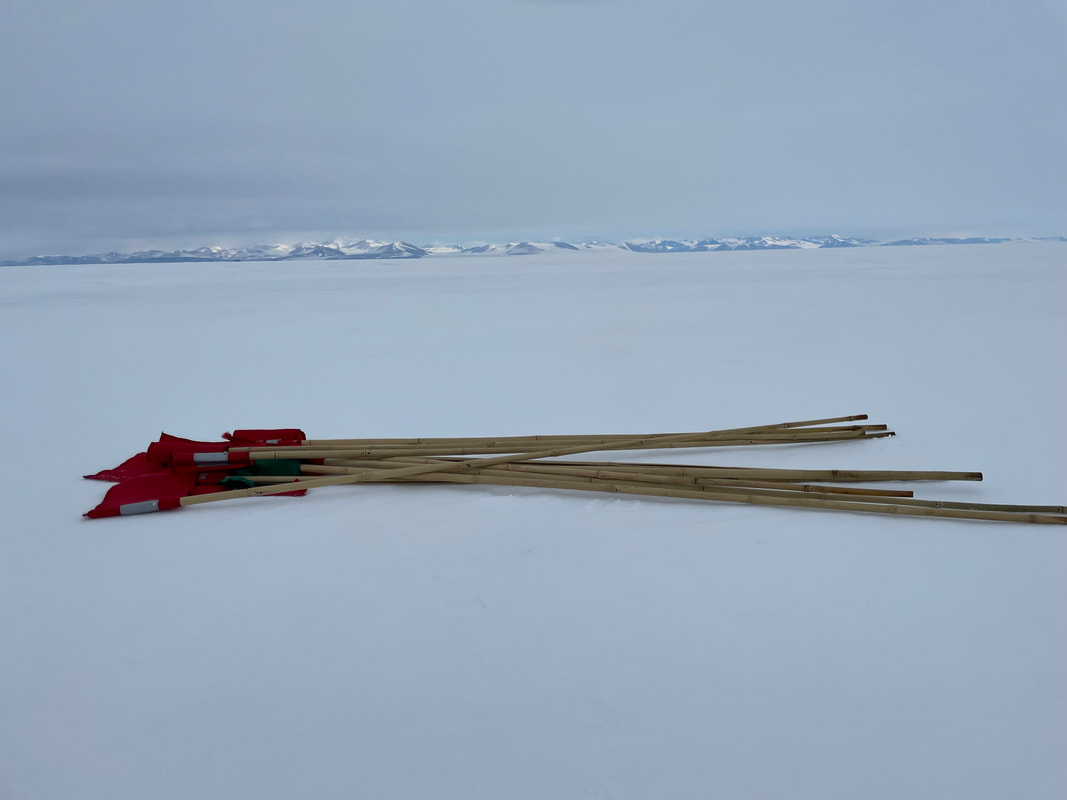 The flags that marked our field site. Monday was our last field collection day. I'm in the lab now, at 10 pm on Tuesday, filtering the melted snow that is my last sample from Antarctica. The rest of the week before we leave will be filled with packing and cleaning, which sounds trivial, but will probably take every spare minute of each day left. The sea ice has changed over our weeks here: the ice has gotten warmer and wetter (shifting from phase I to phase II) and there are more bare patches of ice where the snow has melted away. In a few months, the ice will be gone and our field site will be open water. 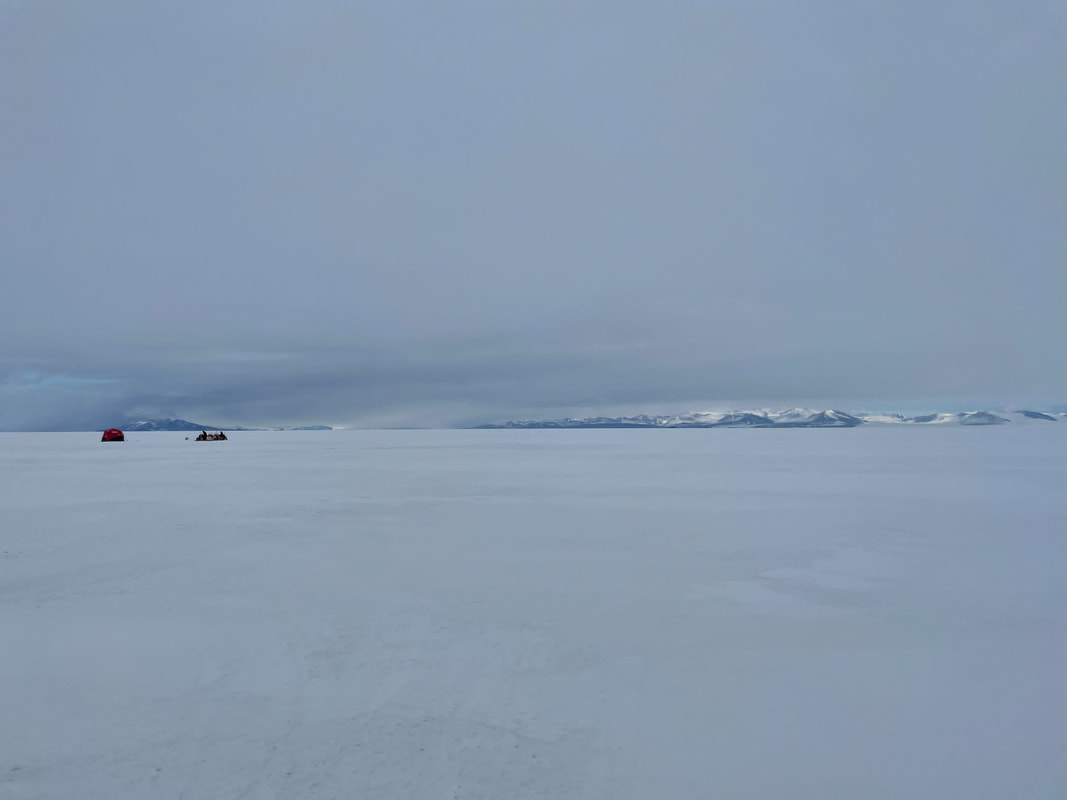 Our lady-ice-bug and snowmobiles on the sea ice.
This evening is special not only because it marks the end of my field samples, but also because it really snowed tonight! We haven't had a good snow since we've been here, just a few days when there were small flurries. The air in Antarctica is usually too cold to hold water vapor, so there is very little precipitation here. But I guess with the changing season and warmer air, snow is possible! 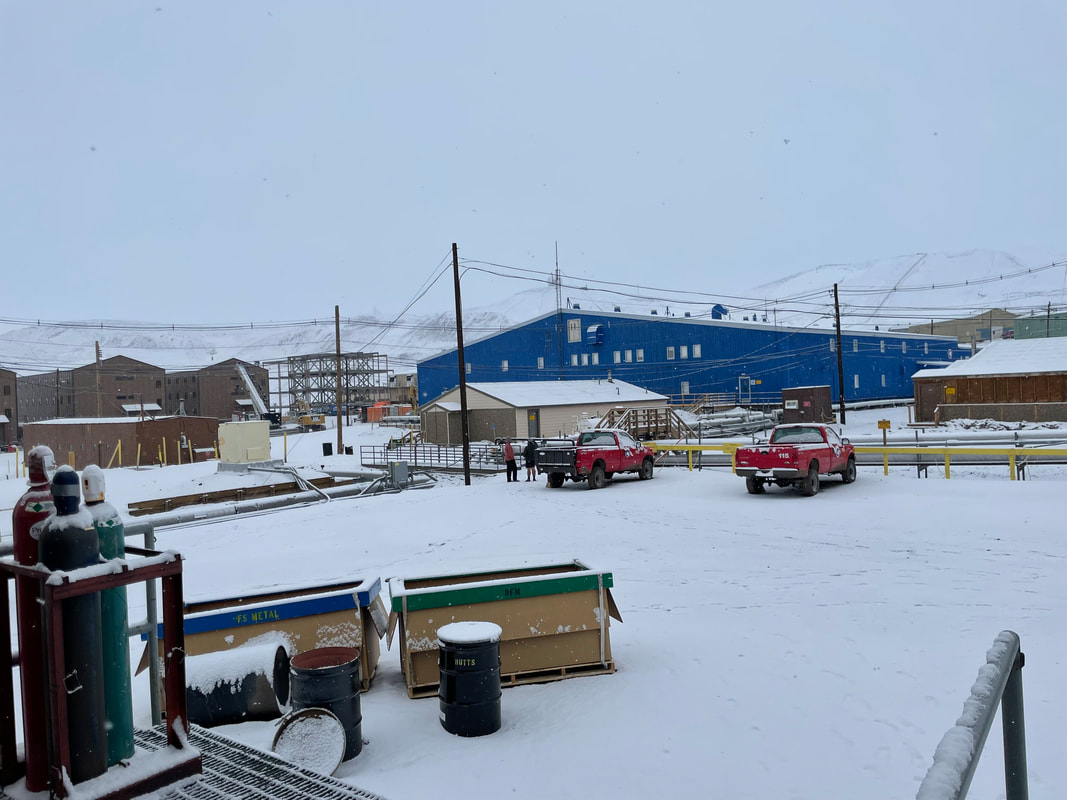
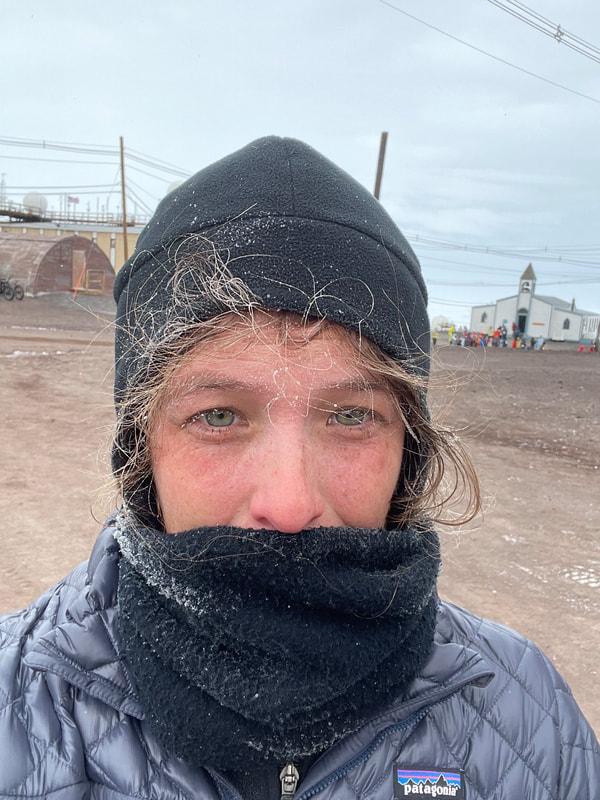
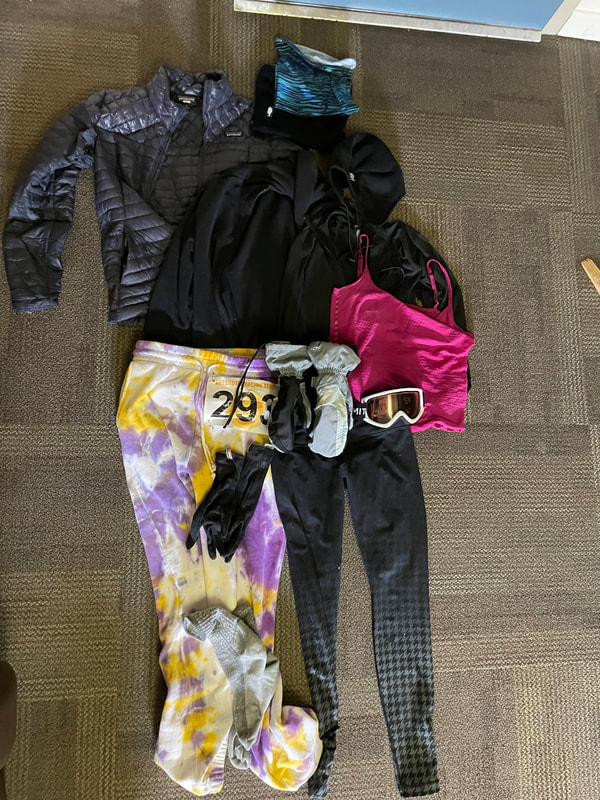
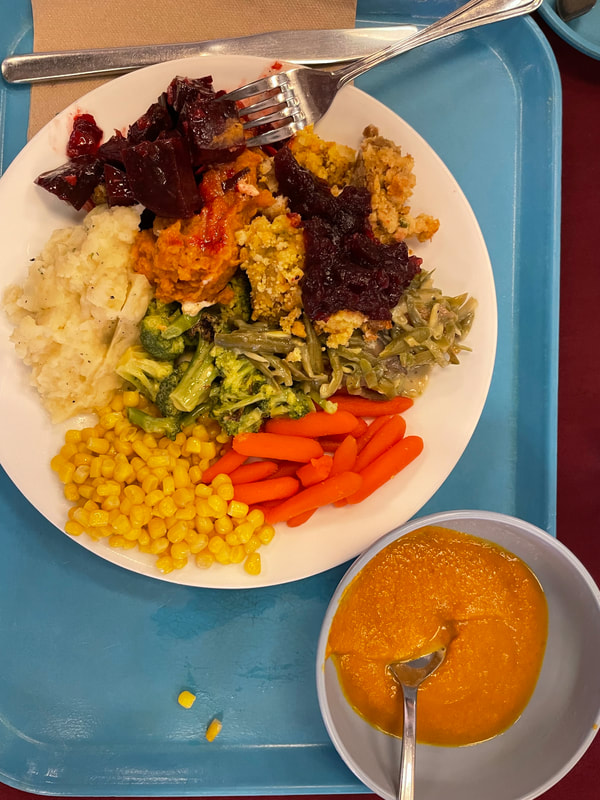
McMurdo Thanksgiving is celebrated the Saturday after actual Thanksgiving and almost everyone on station gets the full two day weekend off. Most people here work 6 days a week with only Sunday off, so parties were in full swing to celebrate the longer weekend. We all went to Adela's tango class Friday evening and then I was in the lab with Katarina and Adela until almost 1 am. Saturday morning there was a 5K turkey trot. The weather was not great: very windy and lightly snowing. The first half of the run was uphill and against the wind and it was probably the hardest 1.5 miles I have ever run. I had a buff over my face (and goggles), but my condensed breath and snot (my nose was running like crazy) made my buff freeze solid, which was very hard to breathe through. Once we turned back at the top of the hill and the wind was with us the run was much easier.
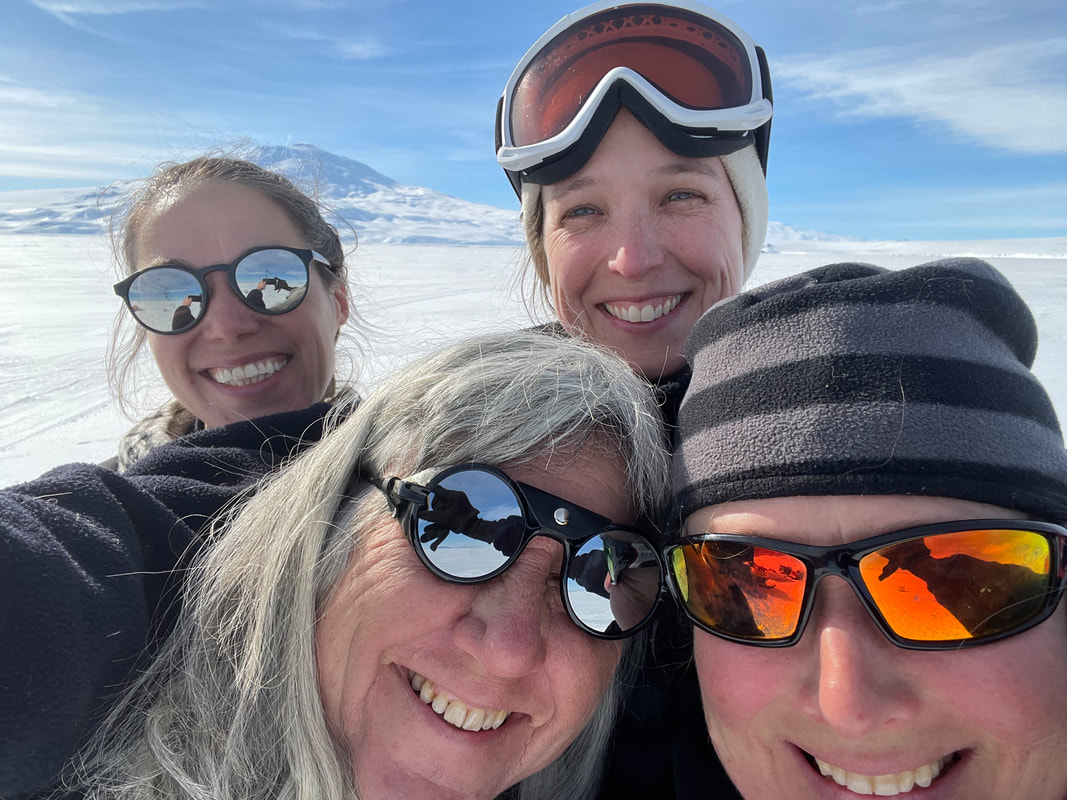
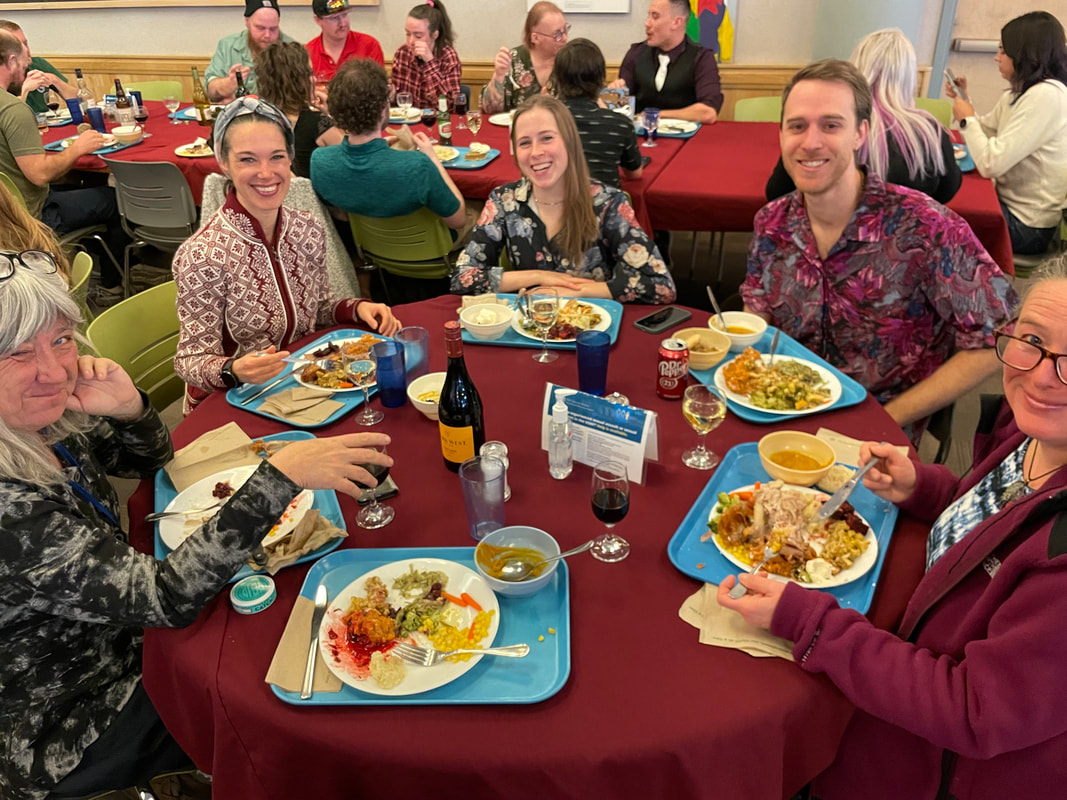 Katarina, Adela, Rachel, Keegan, and Karen By going out on the sea ice, of course! Yesterday (Thanksgiving) we went to Cape Evans, which is the northern end of the sea ice route. We were hoping to find different sea ice as a point of comparison with our regular sampling area, where we still go every week. And we found it! Cape Evans is at the base of Mount Erebus and the ice is snow free with dusty pockets of crushed volcanic rock. The ice was much wetter and softer than the ice at our regular sampling area. We're excited to see if this means different chemistry and biology.
There were several seals right next to the sea ice route yesterday. One was even crossing the road! (Why did the seal cross the road? Submit your responses in the comments section.) When we see seals nearby, we need to swerve out onto the ice to so we don't disturb them. But our snow mobiles are so noisy that they definitely noticed us anyway. Since seals have no land predators here they mostly don't care what the noisy humans are up to because they don't see us as a potential threat. 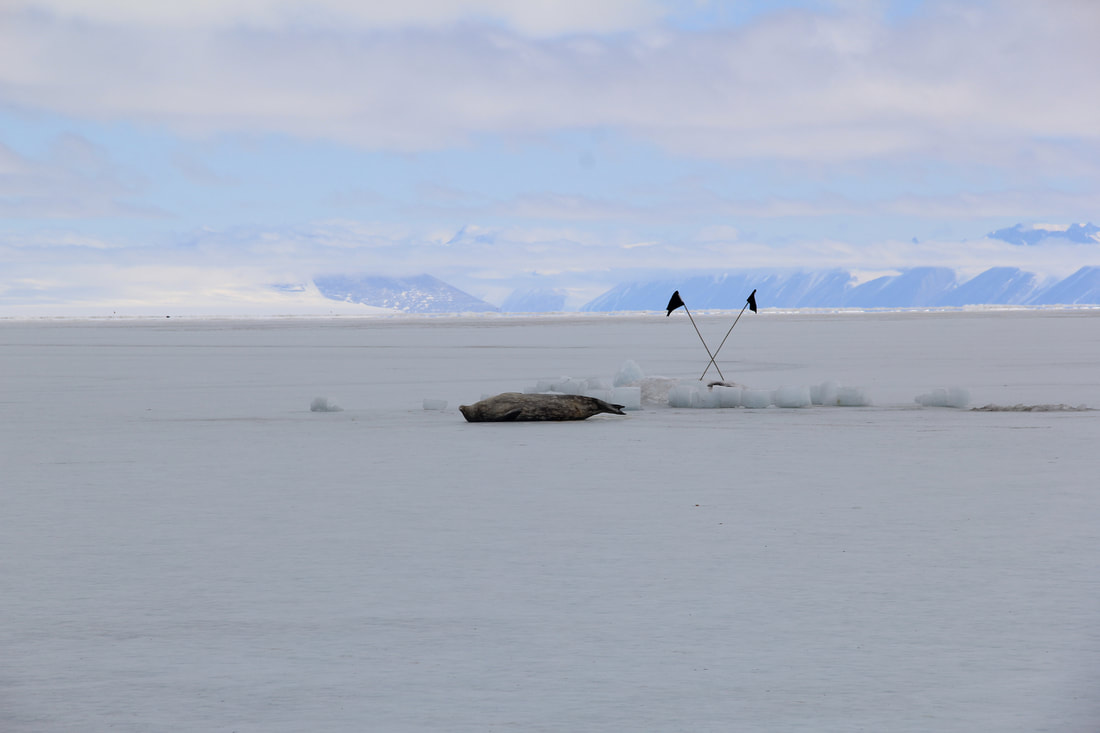 The seal at the end of the sea ice route. The military chaplain at McMurdo, Ben, came with us for some adventure. We taught him how to be a real ice scientist.
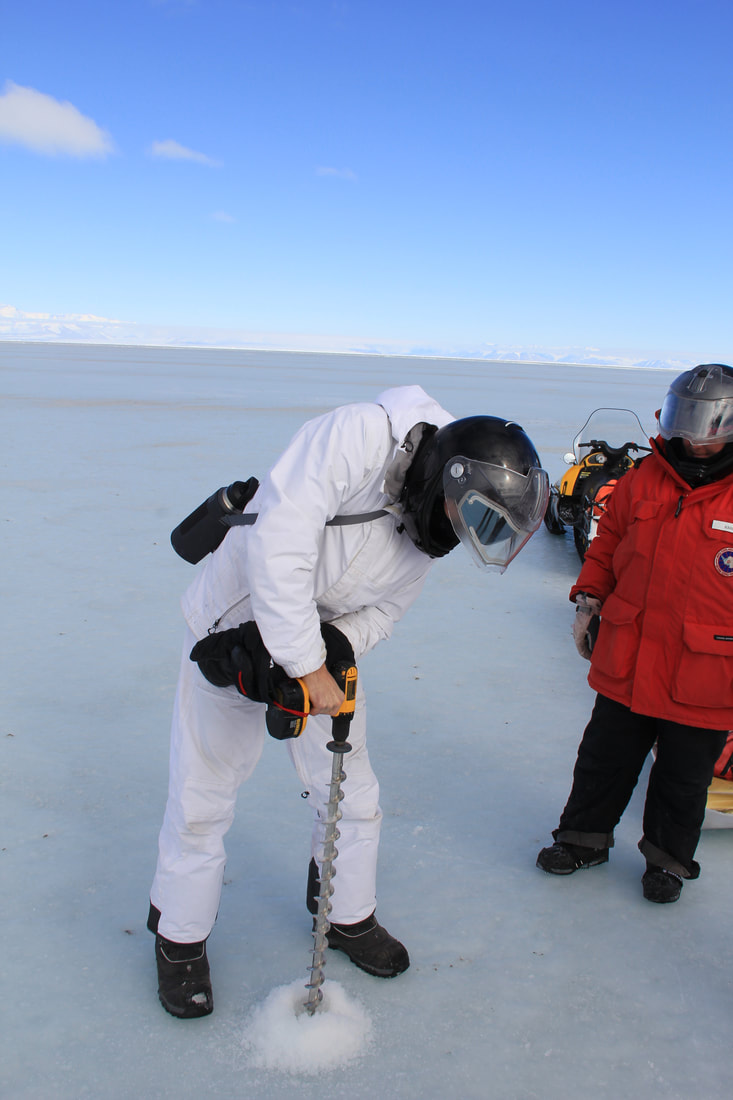
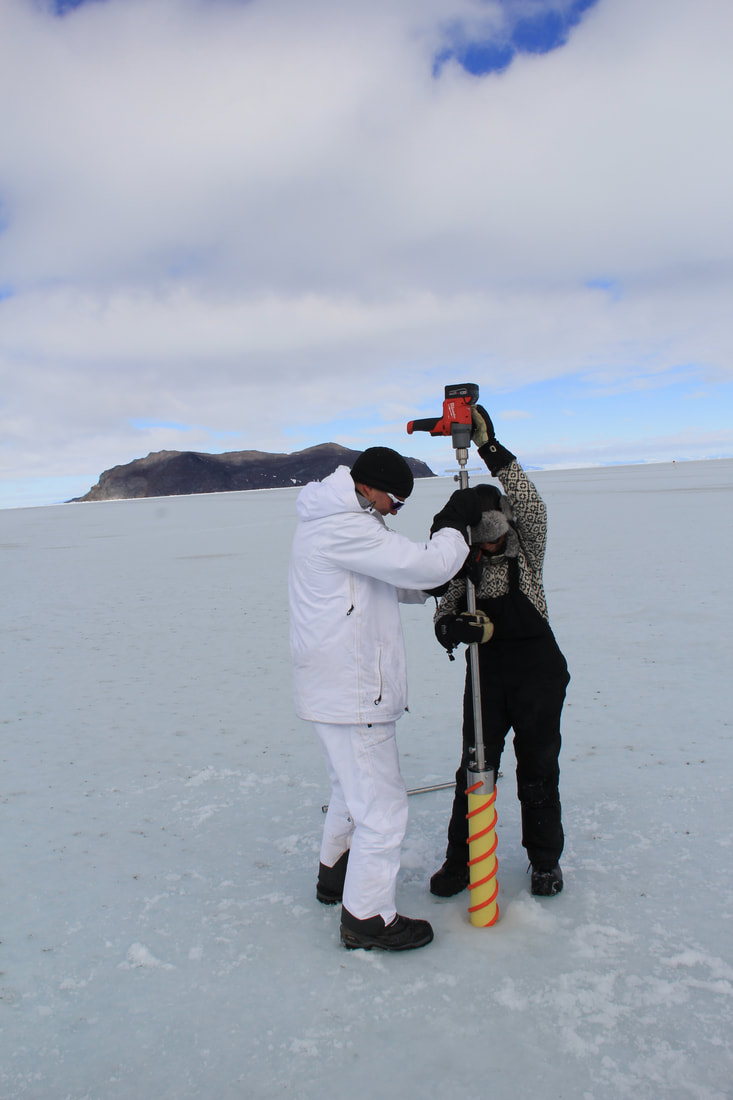
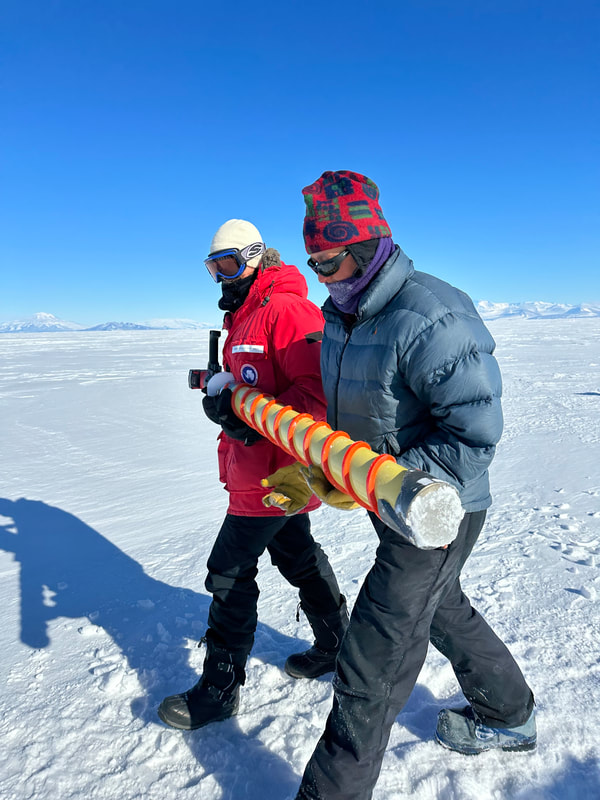
The hut where the members of Robert Falcon Scott's expedition lived is also at Cape Evans. We didn't have permission (or the key) to go inside, but we had a nice view of it. It's amazing how well preserved wooden structures are here, probably because it is so dry. The hut was built in 1911. Scott's expedition to the South Pole did not work out well for him or his group. He was poorly prepared for the environment. He eventually made it to the South Pole (although he was not the first), but he died on the way back. 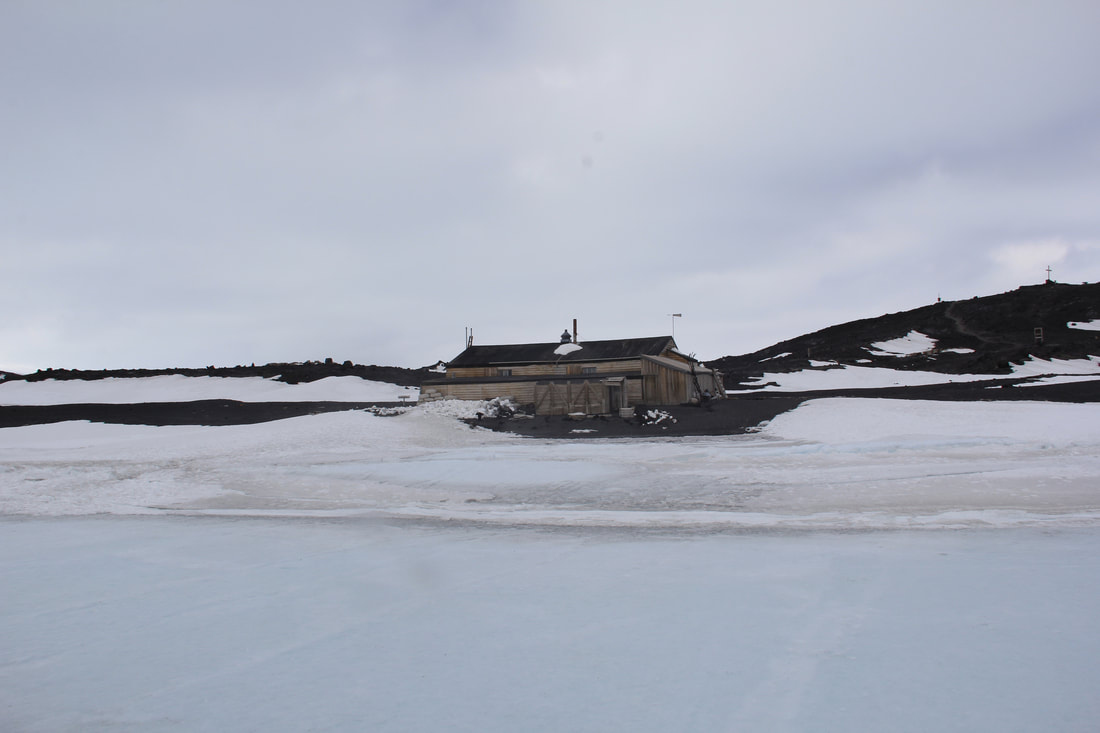 Scott's hut at Cape Evans. The hut closer to McMurdo station was mostly used for storage. 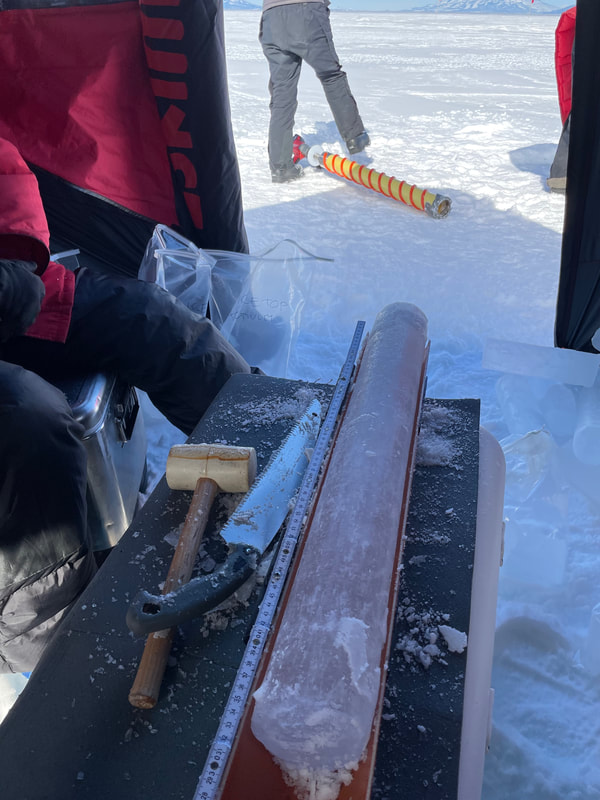 Getting ready to cut the 100th core My arbitrary milestone for the week is our 100th ice core. Katarina has sequentially numbered each core we have collected this trip and yesterday we surpassed 100. I'm in the lab now, filtering the melted samples from yesterday (another very late night) and I have to admit, this core was just like all the others. But knowing that we have collected and processed over 100 ice cores does drive home the number of samples that we have managed to collect during our time here.
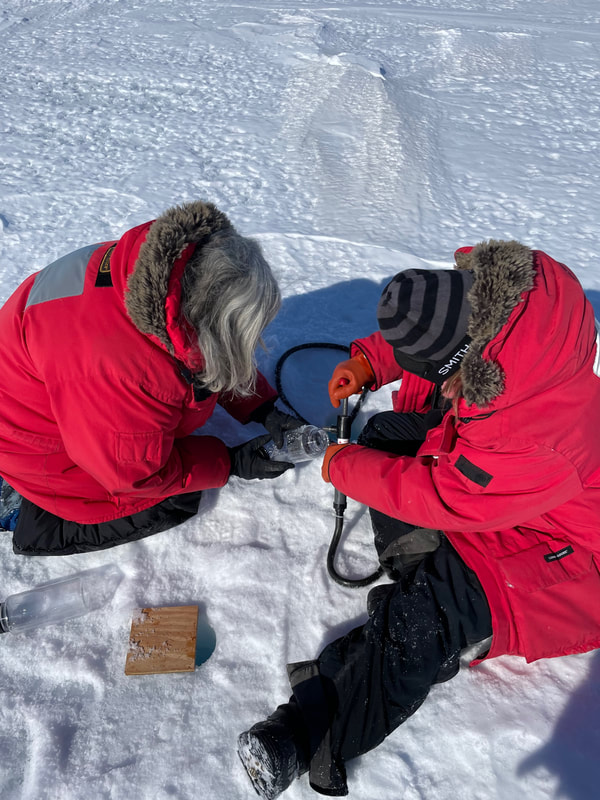
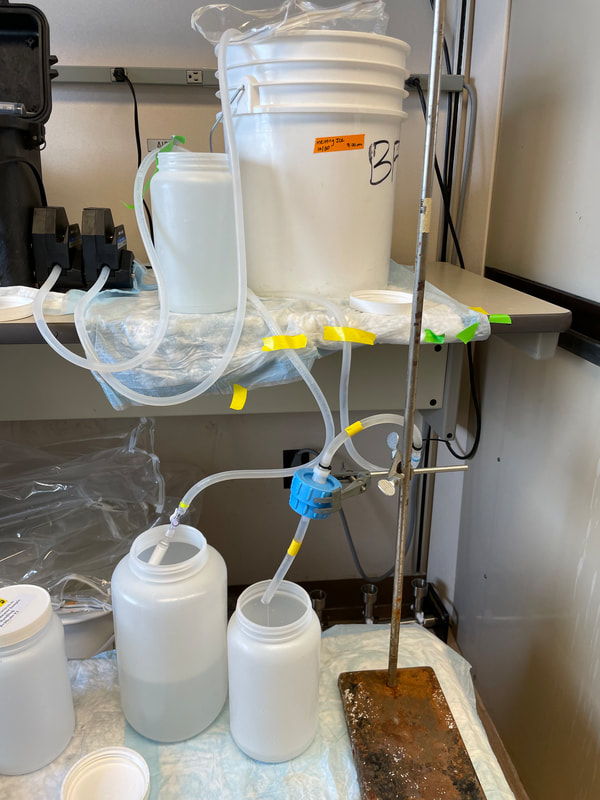
In addition to ice, snow, and seawater, we also collect percolate brine. Sea ice is formed from salty sea water. When sea water freezer, all the salt is concentrated into liquid brine channels in the now fresh ice. This is where the microbes we want to find live. At the start of each sampling day, we take a 1 m core and then leave the empty hole covered while we spend the next few hours collecting our other samples. Before we leave, we pump out all the brine that has percolated through the sea ice and collected in the hole. The hope is that this is the medium in which biological signals of interest will be concentrated and easily detectable.
Your requests for better pictures of the baby seals have been heard. Unfortunately, the Marine Mammal Protection Act and my lack of an expensive, large zoom lens on my camera make it difficult to get high res close-ups of the babies. But I have attempted to do some photo zooming and cropping and I'm hoping that you can see the pups a bit better in these photos. I'll keep trying! 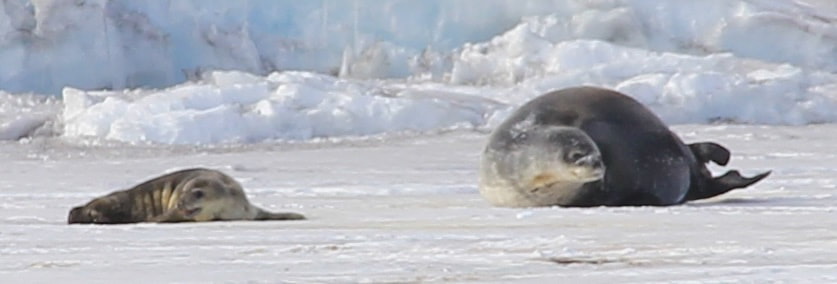 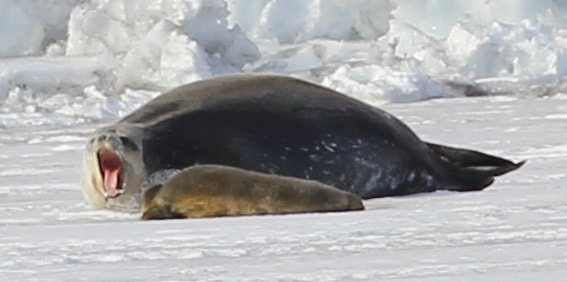 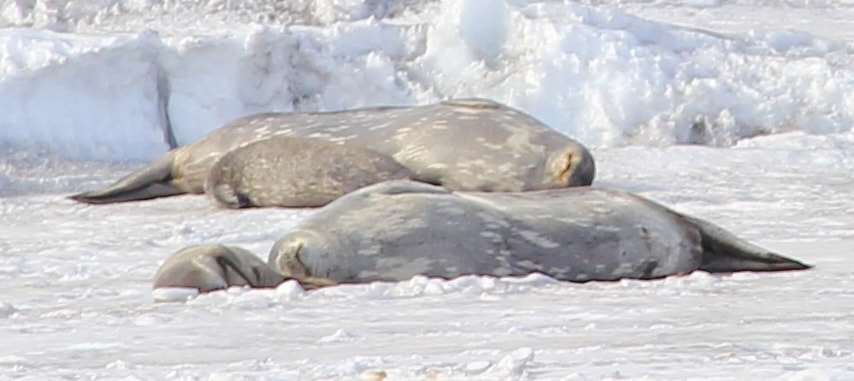 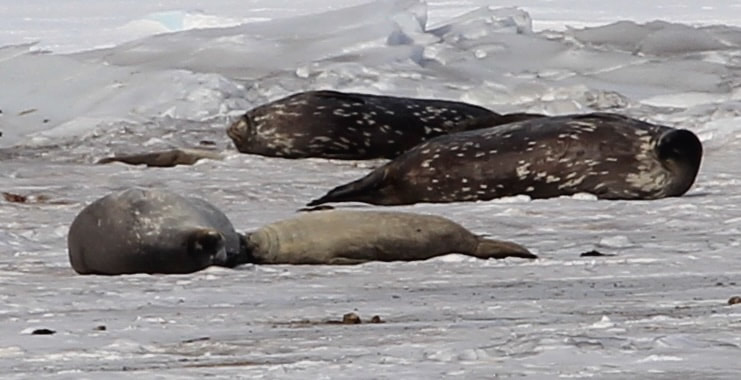 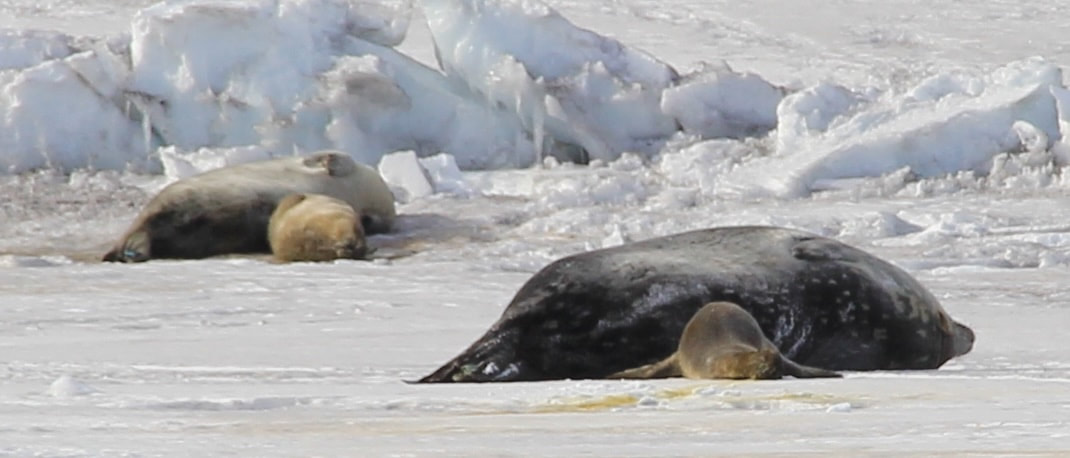 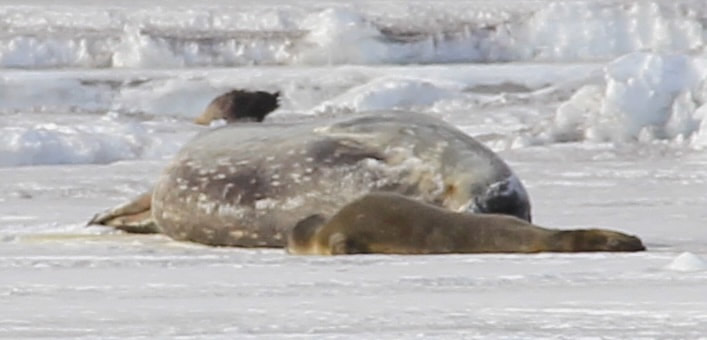 Cuteness alert: this post will contain pictures of adorable baby sealsWe wanted to explore some different sites yesterday to see if the chemical bromoform distribution throughout the sea ice is different. If we find something markedly different, we could sample for biology as well to try to better understand how chemistry and biology intersect in the ice. We worked with the field safety team to identify an area near Razorback, past the Erebus Glacier Tongue, that has been snow free, which means that the ice has more light exposure than at our normal, snow-covered site.
Driving over the snow-free ice was much noisier than on the snow because of the sleds dragging over a harder surface. We also had to stop multiple times to measure sea ice cracks and make sure the ice was thick enough to cross safely. The dynamic ice in this area means that there are openings for seal holes and Razorback was surrounded by Weddell seals, many of which have been tagged already by the seal team from Montana State. Since this area is along the regular seal team route, there was also a seasonal shelter - called an apple - and a refueling station for the seal team's snow mobiles. You can kind of gauge how old the pups are by the size of the pup and of the mom. The pup in the picture of the very large mom calling to her pup is very young: it is tiny and the mother is still huge. Mother seals will lose a huge amount of their body weight during the weeks of intense pup rearing since they are not eating much/at all and are providing fat-rich milk to their pup. There were also a lot of skuas at Razorback. Skuas are scavenger birds and were probably feeding on pieces of seal placenta, and even seal feces, scattered on the ice. 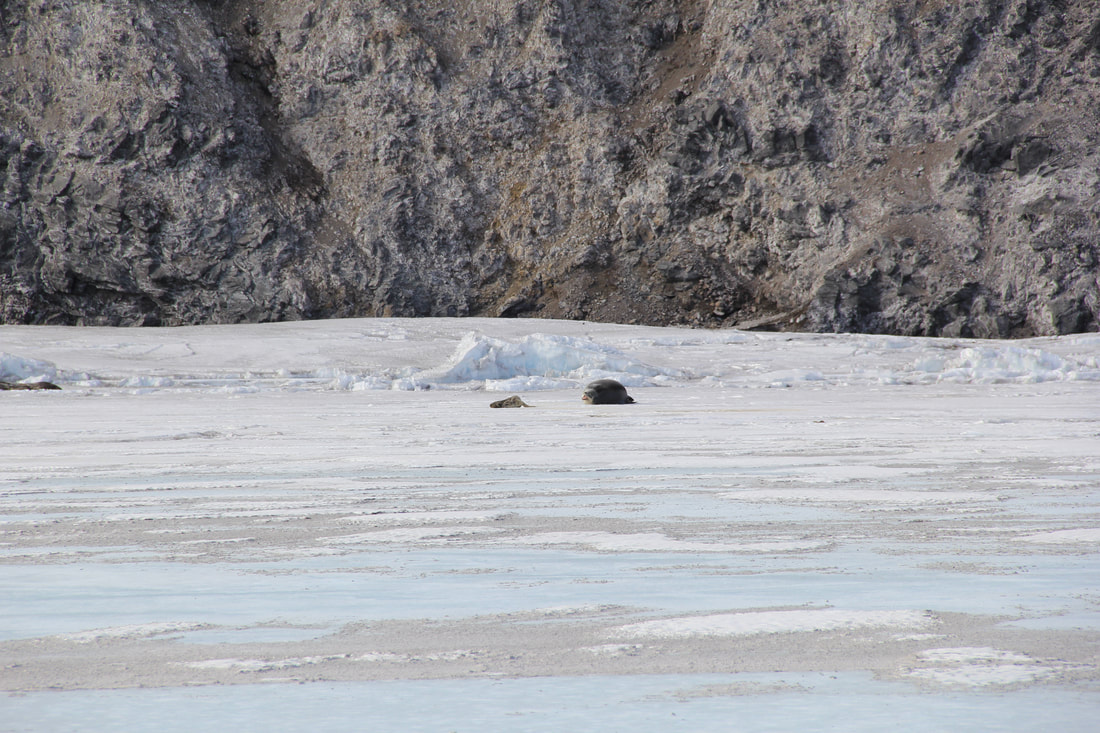 Mother seal calling to her new pup. We couldn't get too close to the seals, especially the moms and pups. 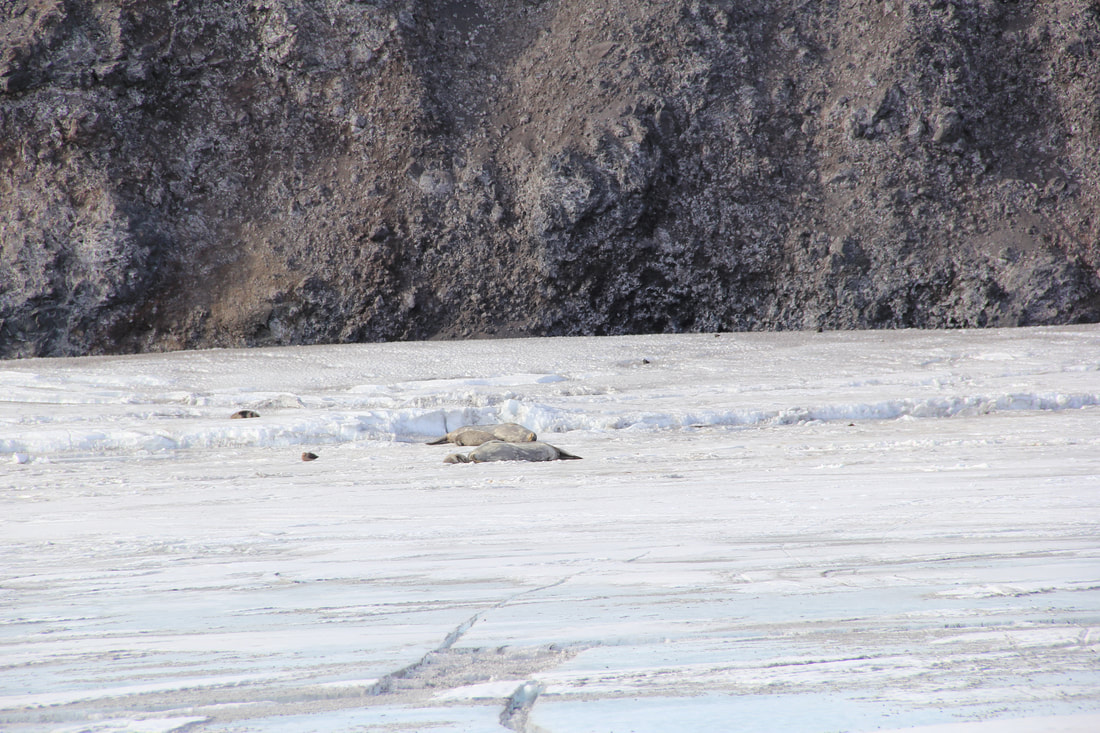 Thick seal blubber makes even sea ice a cozy place for a nap. You can see that these pups are bigger and the moms are smaller. 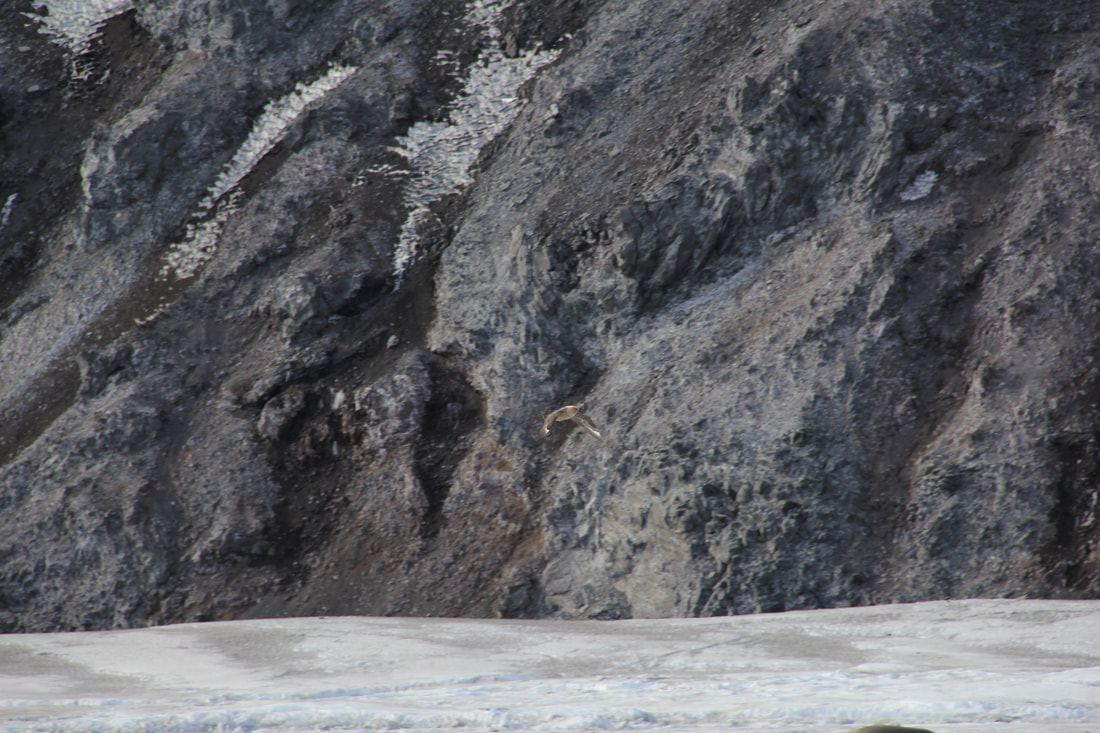 Skua 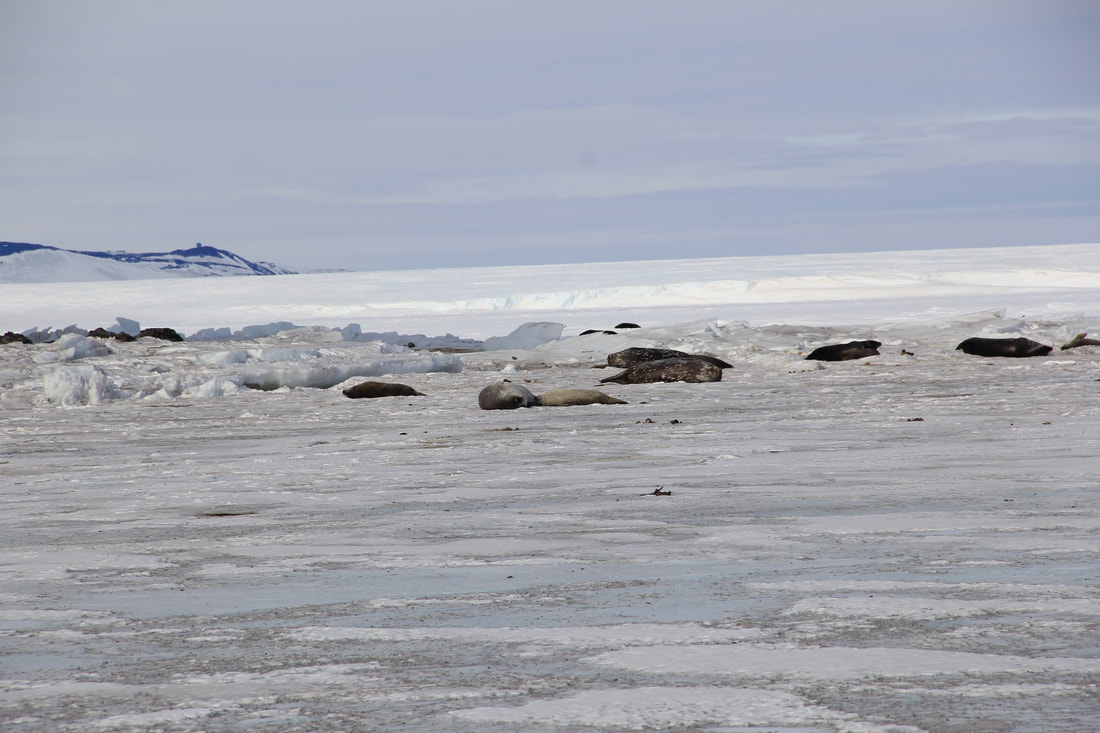 We are used to silent days on the ice, but the seals were very noisy and it sounded like people were yelling in the distance. We noticed an interesting starburst patterns all across the ice surface. None of us knew what it was, but we happened to be at a glaciologist's birthday party last night and Sridhar from Penn State explained to us that these are likely caused by small, localized melting. Dust can accumulate on the sea ice surface in certain areas, make the sea ice less reflective (lower its albedo). This will lead to small areas of meltwater just below the ice surface and the starburst is the meltwater moving through the ice. 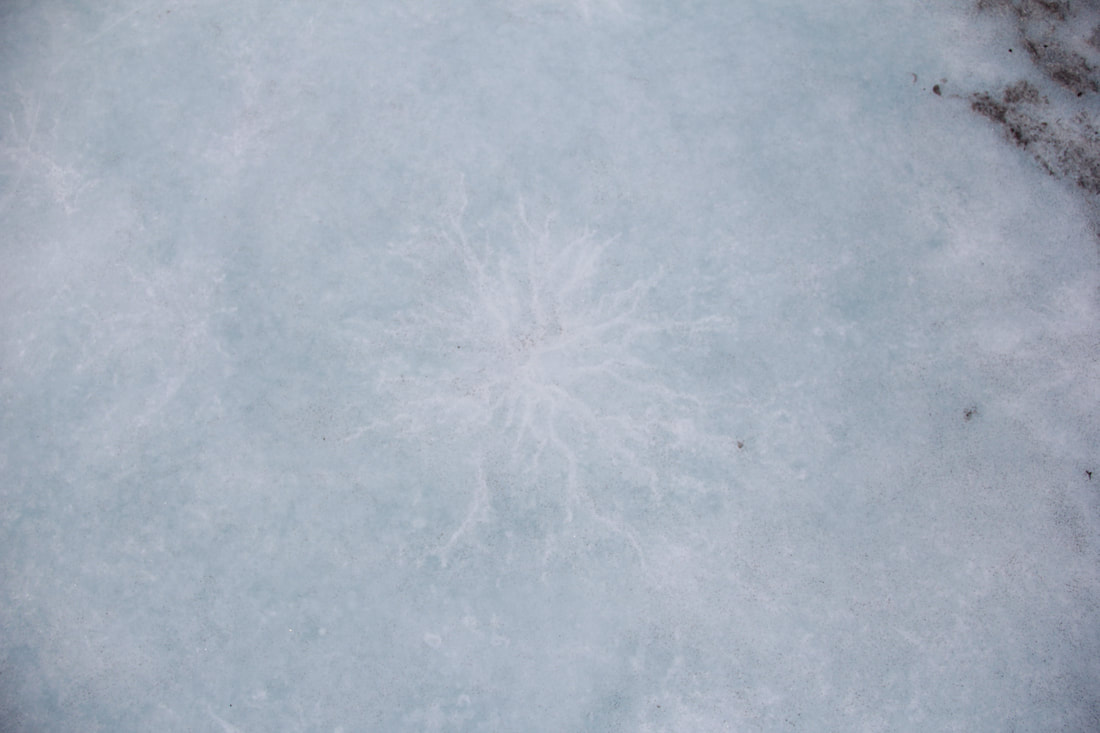
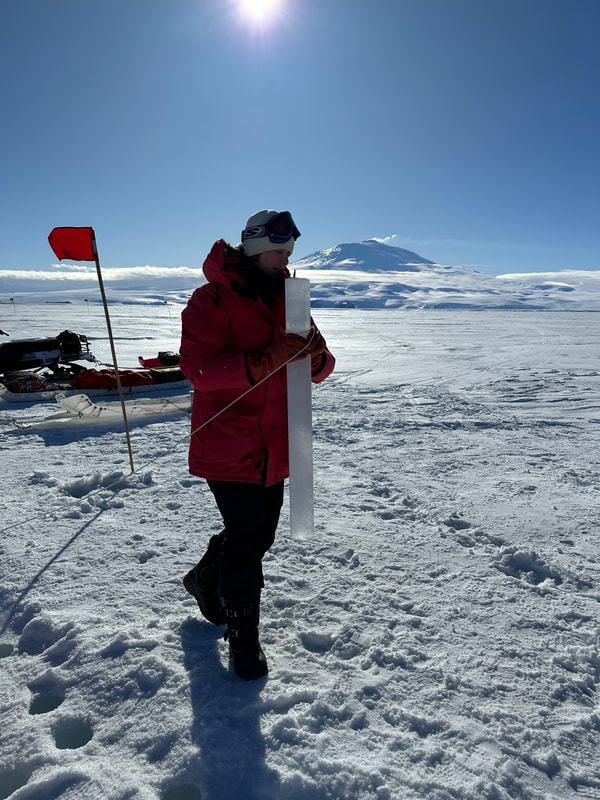
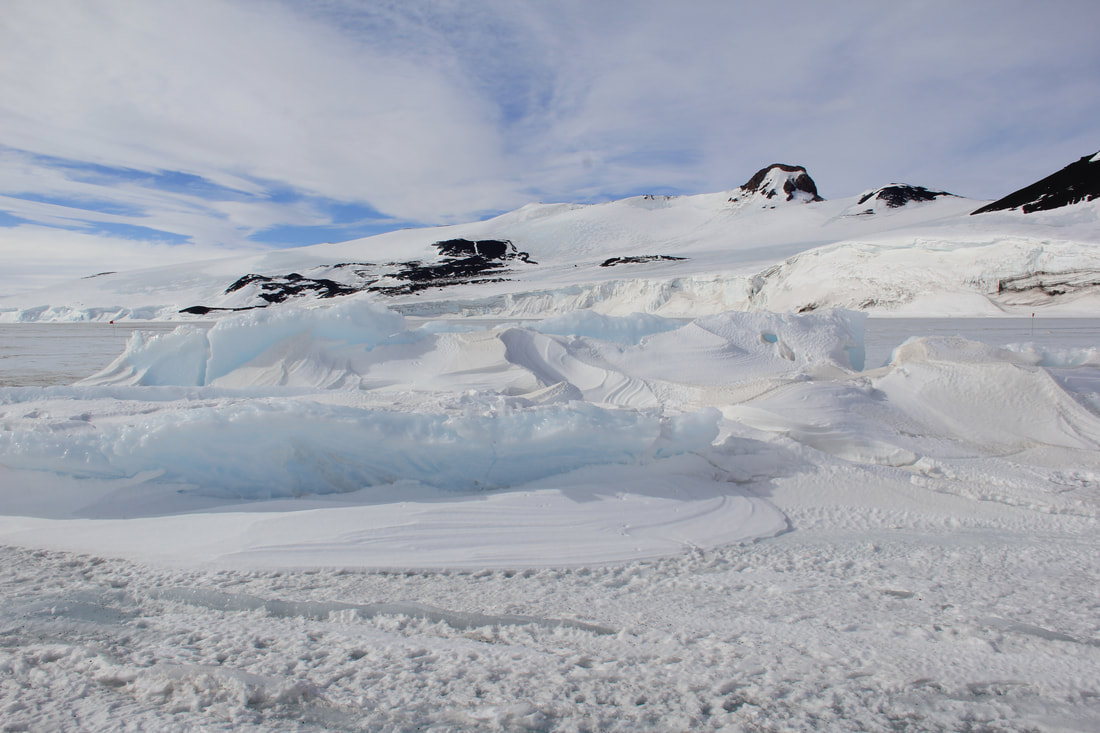 Pressure ridge And then there were 4Shelly took her scheduled flight back towards home on Wednesday so our smaller crew headed out for our first field day without her on Thursday. I started the day with my usual call to the weather forecasters in Charleston. I talked to Chris that morning and after some discussions of wind speeds and potential gusts, I brought the information to the rest of the group and we decided to give it a try. If it's too windy, then ice shavings and snow blow into the hole while we are coring and can cause the corer to get stuck. Also, it's just a much less pleasant experience to do field work in the wind. Luckily, the weather was gorgeous on the ice. We had a bit of wind, but it was our warmest day yet and our lady ice bug (our pop up tent) provided shelter when we wanted it. The tent shelters our ice cores when we are doing temperature profiles as well as providing shelter for snacks and pee breaks (these all happen at different times). 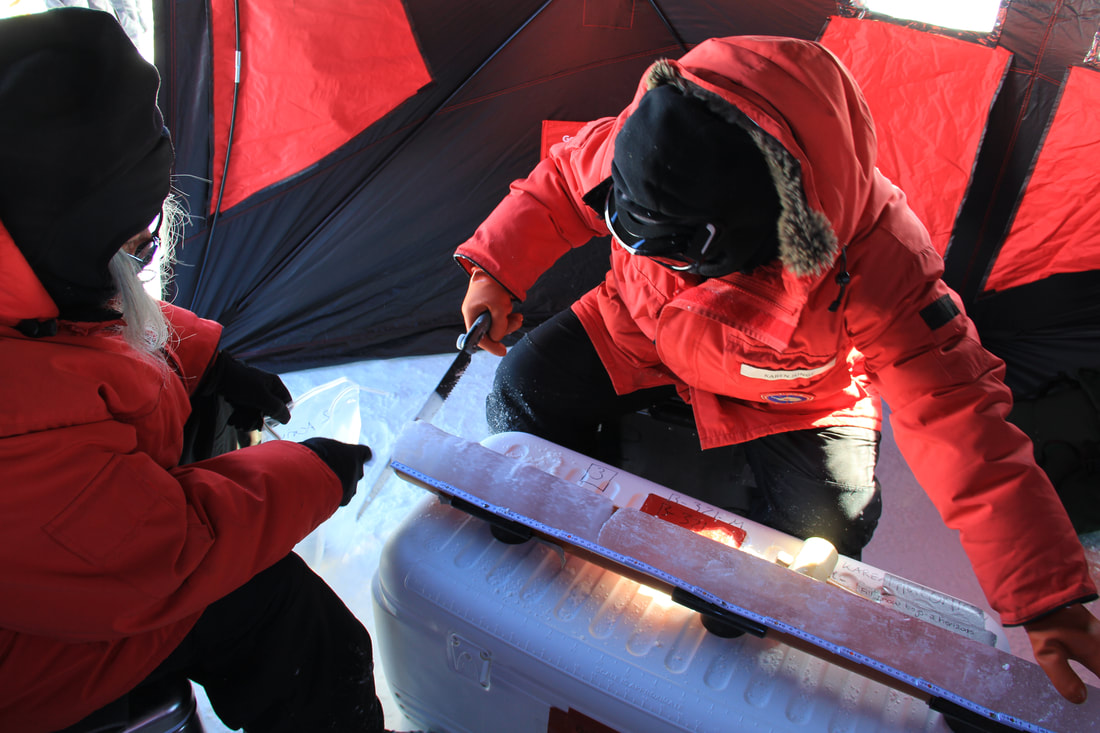 Karen and Katarina cutting an ice core in the tent.
We are having some mysterious contamination issues in our artificial brine that we use to melt our samples. This is slowing us down quite a bit in the lab, meaning some longer hours this week. I also learned how to weld this week, thanks to John, the welder on station. The results weren't pretty, but it was fun to do something that wasn't watching liters and liters of water filter in the lab. 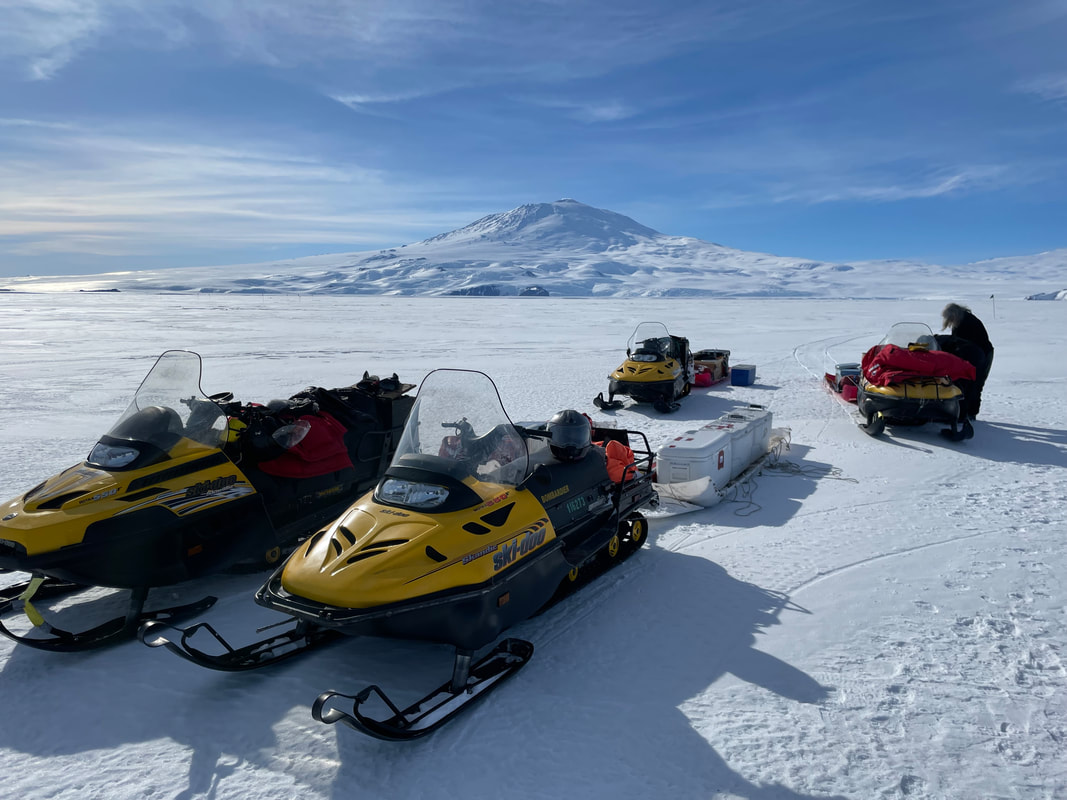 Snowmobiles parked at our field site in front of Mt Erebus. We had our first real field sampling week last week. We have selected our sampling area, which contains 9 sampling sites, and will return to it once a week to monitor the changes in the chemistry and biology of the snow and ice. Well, last week we went twice! We got notice of an incoming storm forecast for the beginning of this week (today) and decided to squeeze in a sampling day before the weather hit. I'm glad we did because today is officially our first Condition 2 day: high winds (48-55 knots), low visibility (mostly due to blowing snow), and/or extreme cold temperatures. We only have two of those today (high winds and low vis), but it's enough to keep everyone on station. (In the process of getting this posted, the conditions on the sea ice and at the airfield have shifted to Con1, which is the most extreme weather rating.) 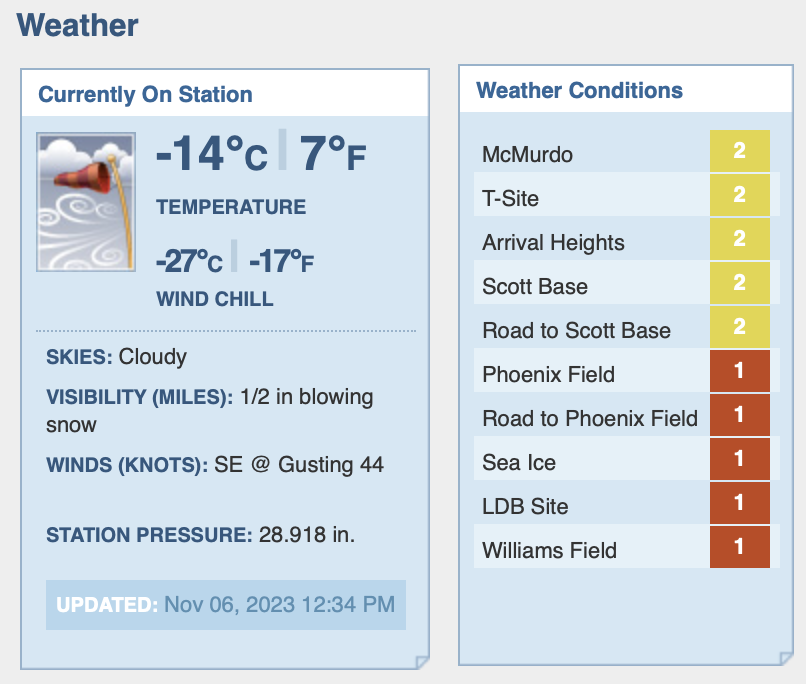 We did have two beautiful, clear sunny days of sampling on the sea ice last week. We are gearing up for a quick trip (maybe) tomorrow afternoon and then another full sampling on Thursday. In between sampling days I have done a little bit of hiking around station, including out to hut point to see a baby seal! I'm still figuring out how to get my new computer set up on our slow network so I don't have all my pictures to post yet, but stay tuned.
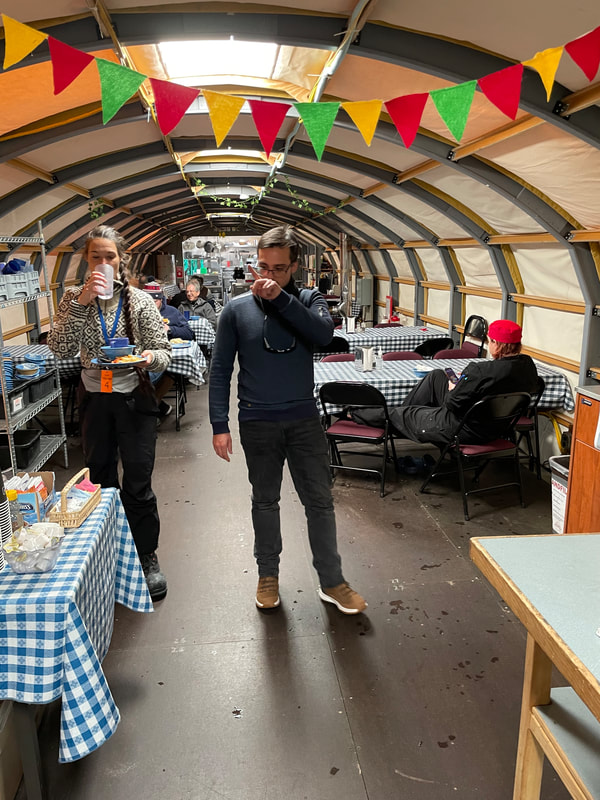
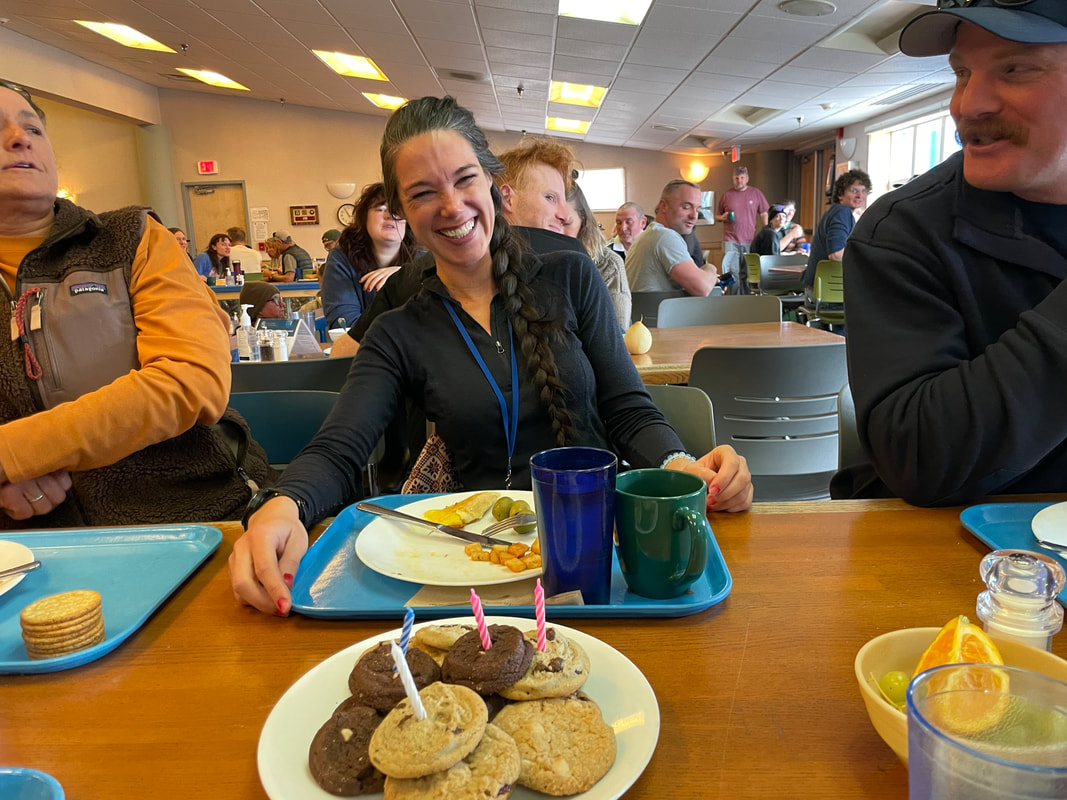 Adela with her birthday cookie pile. We have a constant supply of fresh cookies in the galley. |
AuthorI am a marine molecular ecologist at the University of Washington. I'm excited to share my first Antarctica trip with you! Archives
December 2023
Categories |

 RSS Feed
